Dinosaur-Killing Asteroid Originated Beyond Jupiter
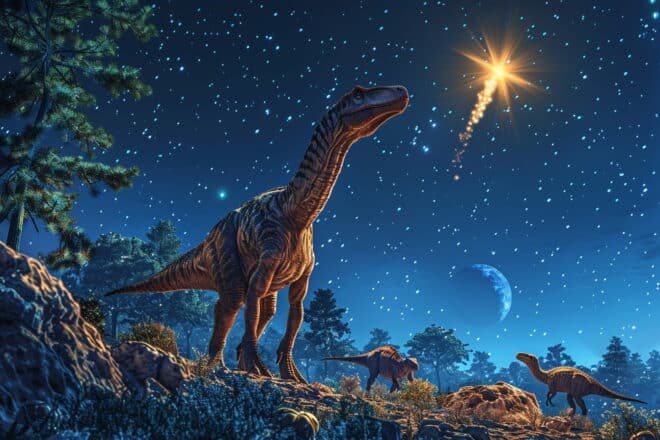
The recent insights into the Chicxulub asteroid impact, located in Mexico's Yucatan Peninsula, aim to enhance our understanding of celestial object impacts on Earth's history. What more can we learn from this?
New Insights on the Origin of the Dinosaur-Killing Asteroid
A recent study published on August 15 in the prestigious journal Science reveals that the asteroid responsible for the extinction of dinosaurs 66 million years ago originated beyond Jupiter. This finding, achieved through innovative techniques, challenges the previously common belief that it was a comet.
A Rarely Observed Phenomenon
The study provides fresh insights into the trajectory of the asteroid that crashed at Chicxulub in the present-day Yucatan Peninsula. “We can now confirm that the asteroid was initially formed beyond Jupiter,” states Mario Fischer-Gödde, the study’s lead author.
This discovery is particularly significant because the type of asteroid that struck Earth is seldom observed. Such information could be crucial in assessing future threats and might also offer clues about the origin of Earth’s water.
Beyond Hypotheses: Concrete Evidence
The research is based on the analysis of sediment samples formed 66 million years ago, which incorporated particles dispersed globally from the asteroid impact. The presence of a metallic chemical element, ruthenium, which is not found in terrestrial sediments and thus originates entirely from the asteroid, was detected.
Through this analysis, scientists have definitively differentiated the Chicxulub asteroid from other celestial bodies, establishing that it was a type C asteroid from beyond Jupiter, rather than type S.
Future Implications of These Discoveries
Understanding the nature of asteroids could help unravel the mystery of Earth’s water origin, suggesting it may have been brought by rare type C asteroids.
Moreover, “if we find that other mass extinctions in the past are linked to type C asteroids, we must be vigilant about these celestial objects in the future,” warns Mario Fischer-Gödde.