Mystery of Life: How a Magma Ball Transformed into an Ocean
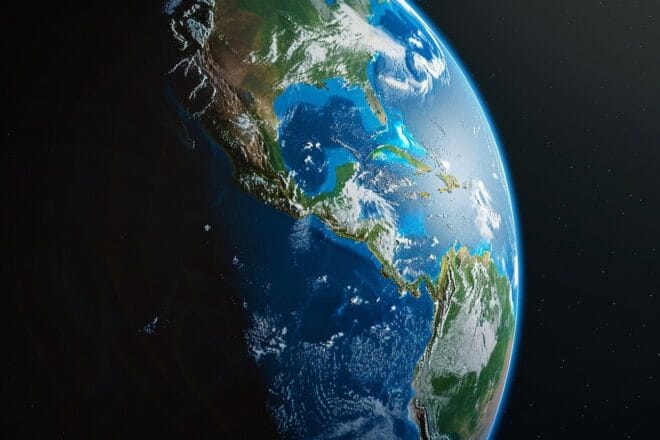
Life undoubtedly began on Earth in its earliest stages. What remarkable events sparked the emergence of the first living organisms? To unravel this mystery, let's journey back to a desolate Earth four billion years ago and explore what could have possibly led to the rise of life.
The Primitive State of Our Planet
Picture an endless ocean dotted with smoking volcanoes under a sky thick with heavy clouds, barely penetrated by the weak light of a nascent Sun. Despite the dense overcast, temperatures were stifling. This was Earth four billion years ago, with ocean waters heated to a scorching 70°C.
The Formation of Our World
To grasp how our primitive planet evolved into the world we know today, we must trace back through history. In the first 500 million years, Earth underwent significant transformations: the Moon’s formation, the emergence of an atmosphere, and the crystallization of a magma ocean. In a relatively short period, Earth transitioned from a molten mass to a water-covered planet.
Initially, the terrestrial landscape was vastly different from today’s. However, the fundamental building blocks of our planet were already in place: a layer of liquid water, an atmosphere dominated by nitrogen and carbon dioxide, and the beginnings of plate tectonics.
Prebiotic Conditions
These seemingly inhospitable elements were crucial to the origin of life on Earth. The planet’s ideal position in the young solar system, its optimal size for maintaining an atmosphere and an ocean, and the internal heat generated by colliding planetoids all played a vital role.
This internal heat triggered thermal instabilities within Earth’s mantle, leading to mantle convection. This process caused the uplift of hot material, weakening the solid, immobile crust and potentially initiating plate tectonics around 4.3 billion years ago, with the formation of the first subduction zones.
The Dawn of Life
While Earth appeared inhospitable, vital processes were already unfolding beneath its surface. Despite the harsh conditions, the erosion of volcanic rocks by fresh water introduced life-essential elements like phosphorus and potassium into the ocean. Even though the chemical conditions were still hostile to life, it is clear that something significant was stirring in the depths of this primitive ocean.