“We Were All Wrong”: Screens Confirmed as Cause for Students’ Declining Performance by Swedish Government
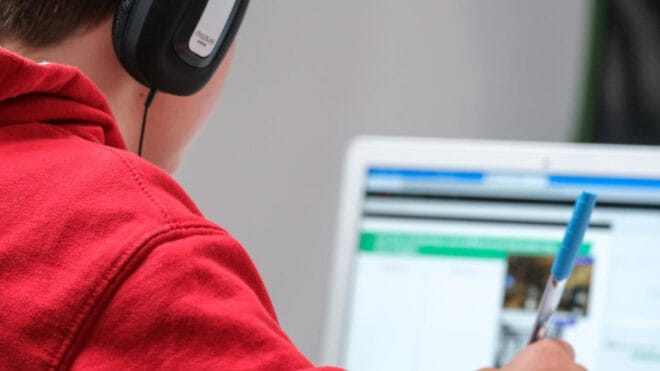
"We Were All Wrong": Screens Confirmed as Cause for Students' Declining Performance by Swedish Government
In an unexpected turn, the Swedish government has declared that screens, once hailed as the future of education, are now a key factor in the decline of students’ academic performance. After years of promoting technology in classrooms, Sweden is now pushing for a return to traditional textbooks, citing a worrying dip in student results that they believe is linked to the increasing reliance on digital devices.
The Rise of Screens in Education
Technology has rapidly become an integral part of our daily lives, and schools around the world have been no exception. In many classrooms, including those in Sweden and even France, digital devices such as tablets and laptops are used alongside traditional textbooks. These tools offer an array of benefits: they can display educational videos, encourage interactivity with quizzes, and enable easy communication between teachers and parents. For example, France has replaced the traditional student correspondence book with tools like Pronote, which allow parents to track grades, attendance, and schedules in real time.
However, these advantages come with their own set of drawbacks. Teachers and parents alike have raised concerns about how easily students can get distracted when using devices. Children who struggle with focus may find it even harder to stay on task, especially when their devices offer tempting distractions like games and social media. Studies have also shown that reading on backlit screens can be more tiring than reading from paper, potentially affecting comprehension and memory retention—especially for younger students.
Sweden’s Growing Concern
In Sweden, the situation has escalated to the point where the government is taking drastic action. Over the past 15 years, textbooks have gradually been phased out in favor of screens. By middle school, Swedish students spend a significant amount of time on laptops and tablets, researching information online, writing assignments, and doing homework directly on their devices. While the goal was to create a more interactive and modern educational environment, the shift has raised concerns, particularly among parents.
One of the key issues is that parents often struggle to monitor what their children are actually doing on these devices. Despite their initial enthusiasm for technology, many parents have expressed frustration at the constant battle to ensure their kids are studying and not wasting time watching videos or playing games. In 2018, a staggering one in five children aged 5 to 8 in Sweden owned their own smartphone. In France, more than half of elementary school students have phones, with nearly 12% of children as young as 9 or 10 already having their own devices.
The Government’s Reversal: Back to Textbooks
For years, Sweden’s Ministry of Education championed the use of digital tools to modernize learning, but the evidence of a decline in academic performance is undeniable. Swedish students remain high in terms of reading comprehension compared to other European countries, but overall academic achievement has been slipping. Lotta Edholm, the Swedish Minister of Education, has expressed concerns over a lack of critical thinking skills and an over-reliance on digital tools, which have, according to her, created a false sense of confidence in students’ abilities.
In response, the Swedish government is taking a bold step to reverse course. Last year, they allocated €60 million to accelerate the return of textbooks to classrooms. This funding is part of a broader initiative aimed at ensuring that every student has access to a physical textbook for each subject. An additional €44 million will be allocated this year and next to support the transition.
The government’s plan is clear: textbooks will once again become the foundation of education in Sweden, providing students with tangible resources that promote deeper learning and focus. The goal is to restore a sense of balance between technology and traditional methods, creating a more grounded and effective learning environment for Swedish students.
The Global Implications
Sweden’s move to step back from digital education tools could signal a growing global re-evaluation of how we use technology in schools. While the benefits of interactive learning and digital resources are undeniable, this shift suggests that, perhaps, we have been too quick to embrace screens without fully understanding their long-term impact on students’ cognitive development.
The debate isn’t just about technology’s role in education—it’s about finding the right balance. While technology offers great opportunities for enhancing learning, it’s important to remember that some of the most fundamental skills, like critical thinking and focus, thrive in an environment free from constant distractions. By returning to textbooks, Sweden hopes to give students the tools they need to succeed in an increasingly digital world, while also ensuring that their educational foundation remains solid.
As more countries look to Sweden’s example, it will be interesting to see how they balance the allure of digital innovation with the enduring value of traditional learning methods. After all, as Sweden has learned the hard way, sometimes the future of education lies not in more screens, but in the pages of a good old-fashioned book.