Is Russia Considering a Ceasefire to Boost Its Economy?
Think you're fully versed in Russia's economic situation? Find out why a truce could be the lifeline its struggling economy desperately needs!
The Russian Economy: A Deceptive Prosperity
In response to peace proposals by Ukrainian President Volodymyr Zelensky, Russian President Vladimir Putin highlighted Ukraine’s economic dependence on the West.
This statement hints at escalating military, diplomatic, and economic tensions between Russia and the Ukraine/West alliance. However, Russia’s economy, despite its outward prosperity, is nearing a critical threshold.
An Overheating Economy
Two crucial factors are essential to understanding Russia’s economic situation. Firstly, according to Tatiana Kastouéva-Jean, director of the Russia/Eurasia center at Ifri, Vladimir Putin is willing to overlook financial, economic, and human consequences to “win this conflict”. Secondly, Putin has an inflated view of his economy’s strength, encouraged by advisers who reassure him that all is well.
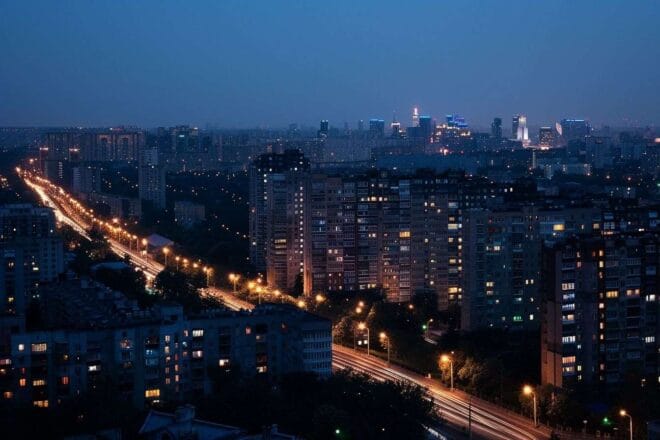
Moscow, with its bustling terraces, impeccable services, and a new metro line, appears thriving. Despite sanctions, Russia reports a 3.6% growth in 2024 and an unemployment rate below 3%. However, this prosperity masks an economy weakened by war.
A War-Boosted Economy
In fact, the Russian economy is propped up by the conflict. Indeed, 40% of the national budget is allocated to the military industry. This focus on the military sector occupies a significant portion of the workforce, to the detriment of other sectors.
Additionally, wage increases due to fierce competition for workers, coupled with the inability to import Western products, have led to massive inflation.
Investments in Decline
Interest rate hikes to control inflation have slowed companies’ investment capabilities. Investment programs are stalled, reducing the country’s modernization. For instance, Russian Railways has cut investment programs on its two most important lines.
Finally, the Russian economy, heavily reliant on exporting low-added-value raw materials, is vulnerable to price fluctuations. Experts agree that the Russian economy may last another one to three years, but its long-term future remains uncertain. The current war could well mark the economic collapse of Russia.