Is Armed Conflict Between India and Pakistan on the Brink?
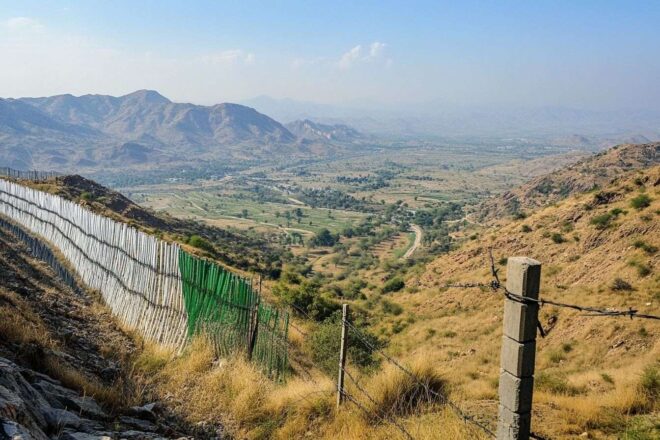
La tension monte entre l’Inde et le Pakistan, alors que les deux puissances régionales, aux relations historiquement tendues, font face à une escalade des provocations militaires et des affrontements frontaliers, faisant craindre un nouvel épisode conflictuel.
Tl;dr
- Tensions India-Pakistan escalate after Kashmir attack.
- India grants military “operational freedom” to respond.
- Nuclear confrontation risk alarms international observers.
A Dangerous Standoff Follows Kashmir Attack
In the aftermath of the deadly assault in Kashmir on April 22, tensions between India and Pakistan have reached new heights. The recent violence, which left 26 dead, has sharpened anxieties across both nations, pushing them ever closer to the brink of open conflict. Public outrage in India has fueled calls for decisive action. Many now question whether the government is truly capable of safeguarding civilians—a sentiment echoed by analysts such as Praveen Donthi, who observes: « De nombreux Indiens ont exigé des représailles contre le Pakistan (…). Les critiques envers l’incapacité perçue du gouvernement indien à protéger les civils sont également répandues ».
The Political and Military Response
Under immense domestic pressure, Prime Minister Narendra Modi has granted his armed forces what he describes as « liberté opérationnelle »—the authority to choose how and when to respond. This move signals a significant shift in posture, suggesting that military options are very much on the table. Meanwhile, Pakistani leaders continue to deny any involvement in the incident and insist on a « enquête neutre ». Simultaneously, however, preparations for a potential Indian strike are clearly underway on their side of the border.
Nuclear Shadow Looms Large
For many observers, the gravest concern remains clear: both nations possess nuclear arsenals. The prospect of escalation is thus not merely a bilateral issue—it’s a threat with global implications. As Colin Clarke, research director at the Soufan Center, puts it: « Le fait qu’il y ait un risque d’escalade entre deux puissances nucléaires est parmi les problèmes de sécurité mondiale les plus graves qui puissent jamais survenir ». The risk calculation becomes even more complex given Pakistan’s ambiguous nuclear doctrine, which leaves room for uncertainty regarding thresholds and possible responses.
A Volatile Equation at Play
Several elements explain why this situation remains so volatile:
- Nuclear ambiguity: Pakistan’s stance complicates deterrence calculations.
- Public pressure: Domestic opinion pushes Indian leaders toward retaliation.
- Tactical uncertainties: Limited actions could trigger disproportionate escalation.
The possibility that Indian forces might attempt a measured territorial advance—without immediate Pakistani retaliation—adds an additional layer of risk. Such strategies could seriously test Pakistan’s threshold for response.
As the region waits anxiously for what comes next, the hope remains that cooler heads will prevail—and that diplomatic channels can contain what is rapidly becoming one of Asia’s most perilous standoffs.