Gladia: Europe’s Multilingual Tech Voice Challenging AI Giants
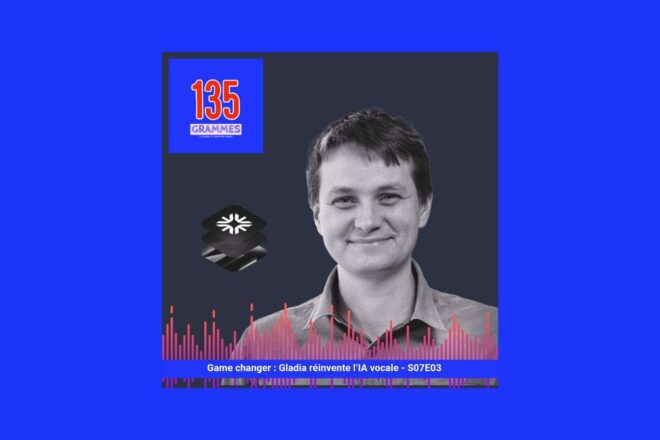
La startup française Gladia s’impose sur la scène technologique européenne grâce à sa solution de transcription et d’analyse vocale multilingue, rivalisant ainsi avec les principales plateformes mondiales d’intelligence artificielle spécialisées dans la reconnaissance et le traitement de la voix.
Tl;dr
- Gladia focuses on multilingual voice transcription innovation.
- Technological advances include rapid processing and emotion detection.
- Global partnerships drive accessibility and sector adoption.
Strategic Shift: Multilingualism at the Core
At its inception, Gladia, an ambitious European startup, set its sights on the elusive field of general artificial intelligence. Yet, as market realities took hold, the company made a significant pivot—specializing in multilingual voice transcription. This reorientation was not simply opportunistic. By focusing on so-called « alternative » (non-English) languages, Gladia positioned itself to address concrete needs in both the European market and under-served regions such as Africa and Asia. Curiously though, the majority—almost 60%—of its clientele is found in the United States. This paradox underlines how robust demand for global language coverage still emanates from American soil.
Pushing Technological Boundaries
At the heart of Gladia‘s offering lies an advanced engine: capable of handling over 100 languages, it draws upon a bespoke architecture known as the « Audio Language Model », adapted from LLM technology but tailored for audio processing. The technical performance deserves notice; latency falls below 300 milliseconds for specific scenarios, enabled by meticulous optimization for time-series data. This translates into features like high-precision voice recognition (diarization) and nuanced emotion or intent detection within speech.
Several factors explain this remarkable efficiency:
- Seamless code-switching, moving fluidly between languages;
- Hybrid voice/text analysis, interpreting context and intent;
- Reduced hallucinations, as models stay anchored to raw audio signals.
Concrete Applications and Sector Partnerships
Far from being confined to laboratories, these technologies are already finding real-world footholds. Sectors such as telecommunications, media, education and call centers have integrated Gladia’s solutions. Notably, their « cloud-first » B2B offering emphasizes both quality and security—eschewing open-source models to safeguard confidentiality. Collaboration with specialist partners like Clap or Adecco enables continuous fine-tuning to practical industry needs. The deployment of REST or WebSocket APIs further smooths integration for client businesses.
Towards Global Linguistic Inclusion?
With its strong base in acoustic processing—and even an ability to distinguish closely related tongues—Gladia hopes to contribute meaningfully to greater global linguistic inclusion. There is clear potential: automating professional speech workflows more efficiently while setting new standards in accuracy and privacy. Yet some industry voices express concerns. As European regulation becomes ever more focused on ethical compliance, could these well-intentioned policies inadvertently hamper local innovation when compared with international tech giants? That remains an open—and pressing—question for a sector very much in flux.