Piaggio Unveils Robot Companion Inspired by Star Wars Droids
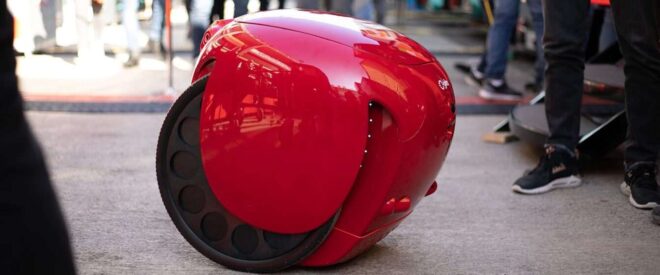
Piaggio dévoile une version innovante de son robot suiveur, désormais doté d’un design et de fonctionnalités qui rappellent les célèbres droïdes de l’univers Star Wars, confirmant ainsi l’influence grandissante de la science-fiction sur la robotique actuelle.
Tl;dr
- G1T4-M1N1: Star Wars-inspired personal robot from Piaggio.
- Technical limitations impact user experience, especially indoors.
- High price keeps robot in a niche market.
Pop Culture Meets Innovation
In the ever-evolving world of personal robotics, surprises are not uncommon—yet the arrival of the G1T4-M1N1, straight from the creative minds at Piaggio Fast Forward, stands out. Drawing inspiration from the legendary universe of Star Wars, this compact assistant blends playful design with real-world functionality. Backed by the iconic scooter maker’s reputation for mobility, and enhanced with exclusive sounds licensed by Lucasfilm, this latest device channels a unique sci-fi appeal that has captured imaginations well beyond traditional tech circles.
A Robot Designed to Lend a Hand—Literally
For those familiar with the storied history of the Vespa, seeing its parent company pivot towards cutting-edge robotics may raise eyebrows. Yet for several years now, the Fast Forward division has been quietly reimagining urban movement. Their first creation, the Gita—« jee-tah » to aficionados—offered an innovative solution for carrying personal belongings without resorting to a car. However, its steep price tag limited its reach. The lighter Gitamini aimed to correct that, but it is with this Star Wars-themed G1T4-M1N1 model, priced at $2,875, that Piaggio seeks to tap into a more emotional connection with consumers.
Equipped to carry up to 9 kg and boasting a range of nearly 40 km at speeds up to 10 km/h, this droid-like companion delights with « droidesque sound effects » and animated responses. Children in particular seem instantly charmed—at least at first sight.
User Experience: Wonders and Hurdles
But as initial fascination fades, practical realities emerge. At home, users quickly discover that stairs remain a formidable barrier: rather than attempting complex maneuvers or automatic adjustments, the robot simply halts. Manual intervention is often necessary—a point acknowledged by CEO Greg Lynn, who admits users must remain alert for « cliffs » such as steps or ledges.
Several elements explain these reservations:
- Sensitivity to obstacles and risk of falling down stairs
- The need for constant vigilance outdoors against theft
- A manual locking system via app that lacks polish
While children’s delight is palpable indoors, disappointment can set in when their new mechanical friend can’t safely venture outside.
The Road Ahead for Urban Utility Robots?
Despite these technical hurdles—and an undeniably high cost—the vision remains compelling. Scenarios like following families to parks or transporting groceries home seem within reach as technology matures. Today though, such robots are best described as niche luxury gadgets rather than everyday essentials. Still, they unmistakably signal an early step toward making urban domestic utility robots more accessible. The path forward will be winding—but thanks to these recognizable wheels, it is already underway.