Why Earthquakes Are So Common in Crete and Across Greece
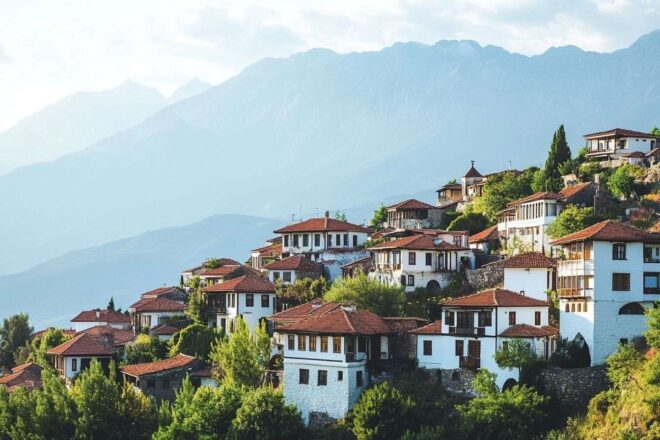
Greece, and particularly the island of Crete, often experiences significant seismic activity. This region’s frequent earthquakes can be traced to its complex geological setting, where powerful tectonic forces shape both the land and life on it.
Tl;dr
- Powerful 6.1 earthquake struck off Crete, no casualties.
- Greece’s seismic risk driven by active tectonic plates.
- Preparedness and infrastructure help limit quake impact.
A Region Shaped by Tectonic Unrest
Early on Thursday, May 22, 2025, the people of Greece woke to unsettling news: a strong earthquake, registering at a magnitude of 6.1, had shaken the sea near Crete. While the tremor was significant, its epicenter—located deep beneath the waves at a depth of 68 kilometers—meant that immediate damage on land was largely avoided. Local authorities activated a precautionary tsunami alert, but in the end, there were no reports of injuries or serious destruction.
The Tectonic Story Behind Greece’s Earthquakes
What keeps placing this picturesque nation in global headlines for seismic events? The answer lies beneath our feet: ongoing movements between the massive tectonic plates. To be precise, it is here that the African plate slides beneath the Eurasian plate—a process called subduction—especially along what scientists call the Hellenic Trench. As tectonics expert Yann Klinger from IPGP–CNRS puts it: « C’est un peu comme si deux personnes essayaient de pousser deux planches de bois l’une contre l’autre », he says. The tension eventually gives way abruptly: that’s when earthquakes occur.
It doesn’t stop there. Numerous secondary faults crisscrossing Greek territory amplify its vulnerability, making it « one of Europe’s most seismically active regions », Klinger further notes.
Living with Risk: Repetition and Resilience
Yet this dynamic isn’t unique to Greece; neighbors like Turkey, and distant counterparts such as Japan, experience similar geophysical pressures. However, a key distinction exists—according to Klinger: « Magnitudes tend to be higher in Japan. A disaster like Tōhoku 2011—with a magnitude above 9—is not likely here.»
In practical terms, residents have learned that aftershocks often follow major quakes:
- Their timing and intensity remain unpredictable.
- No advance warning system exists for these events.
- Experts rely on past patterns to gauge future risks.
As seismologist Guy Sénéchal reminds us: « Aucun signe précurseur ne permet d’anticiper précisément un séisme ou ses répliques. On can only study history to sketch what lies ahead.»
A Nation Adapted for Uncertainty
Faced with perpetual uncertainty, Greeks have woven seismic readiness into everyday life. Through constant refinement of building codes and infrastructure standards—a practical expertise honed across decades—they’ve managed to mitigate both human and material losses when nature asserts itself unexpectedly. This time again, such vigilance ensured that tragedy was kept firmly at bay.