SoftBank Boosts HAPS Ambitions with New Investment in Sceye
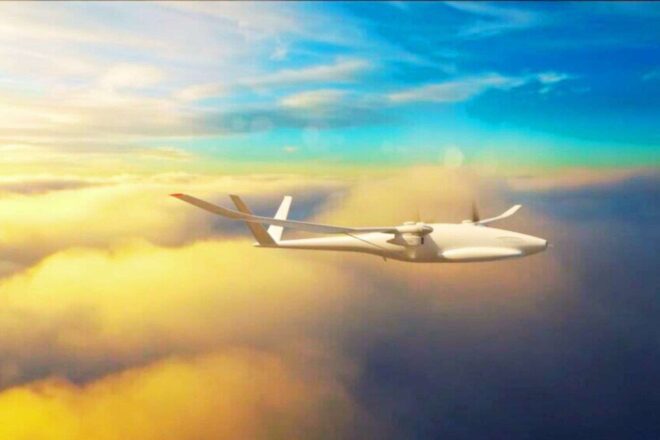
SoftBank is strengthening its involvement in high-altitude platform stations (HAPS) with a new investment in Sceye, a company specializing in stratospheric airships designed to provide telecommunications and earth observation services from the upper atmosphere.
Tl;dr
- SoftBank Corp invests $15M in Sceye‘s stratospheric tech.
- Exclusive deal secures Japanese HAPS market access for SoftBank.
- Commercial launch targeted for 2026 after successful test flights.
A Strategic Leap into Stratospheric Connectivity
As global demand for seamless mobile access continues to surge, one Japanese giant is staking its future on a remarkable, if unconventional, approach. SoftBank Corp recently made headlines by investing $15 million in the American start-up Sceye, a company whose « lighter-than-air vehicles » evoke echoes of zeppelins and promise to revolutionize high-altitude telecommunications. This move signals an unambiguous acceleration toward deploying mobile services directly from the stratosphere—a vision anchored in platforms known as High Altitude Platform Stations (HAPS).
Sceye: Innovation at the Edge of the Atmosphere
Founded in 2014, Sceye has quietly but consistently established itself as a pioneer in this space. With over twenty successful test flights already completed and partnerships spanning both US government entities and private sector players, the start-up has cultivated a reputation for technological reliability. Its CEO, Mikkel Vestergaard Frandsen, did not hide his satisfaction with the new investment, describing it as « a validation of our HAPS platform’s strength. »
For those unfamiliar, these high-flying vehicles are engineered to operate far above conventional aircraft—squarely within the stratosphere—delivering network coverage to regions long underserved or unreachable by ground-based infrastructure. It’s worth noting that only SoftBank Corp will be authorized to offer commercial HAPS services using Sceye‘s technology in Japan, thanks to an exclusive licensing agreement that underscores SoftBank’s determination to maintain its lead.
Pushing Technological Boundaries: From Prototypes to Real-World Promise
But what’s truly striking is how methodically SoftBank has been laying this groundwork. The operator’s pursuit of advanced aerial platforms dates back at least to 2017, when it first signaled ambitions for a commercialized HAPS network. Fast forward to October last year: over the wide-open spaces of New Mexico, an unmanned solar-powered vehicle—the Sunglider—completed a major flight test. At 78 meters long and capable of carrying up to 75 kilograms, this prototype marked another step toward practical deployment.
The implications are potentially far-reaching:
- Expanded mobile coverage: Areas currently out of reach could soon see connectivity.
- Sustainable innovation: Solar-powered craft minimize environmental impact.
- A head start: SoftBank aims for pre-commercial service by 2026.
The Road Ahead: Ambition Meets Caution
Still, enthusiasm is tempered with realism. As pointed out by Junichi Miyakawa, president and CEO of SoftBank Corp, « The HAPS will play a crucial role in reaching hard-to-access areas. » That said, translating trial successes into commercial-scale deployment is rarely straightforward. Nonetheless, the targeted launch window—just two years away—reflects SoftBank’s clear appetite for disruptive technologies.
One thing seems certain: in this high-stakes race toward universal connectivity, both ambition and altitude are set to rise dramatically.