Trump and Putin Meet: Alaska’s Russian Legacy at the Heart of America
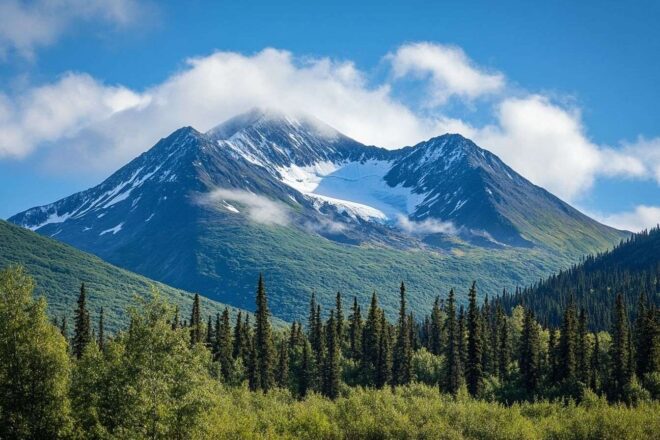
As Donald Trump and Vladimir Putin prepare to meet, the spotlight turns to Alaska—a unique region whose Russian heritage still resonates today. Once part of the Russian Empire before its 19th-century sale to America, Alaska embodies enduring historical ties between the two nations.
Tl;dr
- Alaska’s history reveals deep Russian cultural and religious roots.
- Proximity fuels ongoing US-Russia tensions and surveillance.
- Russian language and legacy persist in local communities.
Lingering Heritage: Russian Roots in Alaska
Even today, echoes of Russia’s colonial presence ripple across the vast landscapes of Alaska. More than thirty-five historic Orthodox churches, their onion domes unmistakable against the wilderness, dot its coastline. The local Orthodox diocese claims to be North America’s oldest—a testament to the faith that first took root here under imperial rule. At Kodiak, a seminary stands as a quiet reminder of an enduring spiritual tradition.
Russian influence arrived as early as the eighteenth century when Danish navigator Vitus Béring, sailing for the tsars, helped open this northern door to the Americas. Driven by a relentless quest for seal and otter pelts, Russian settlers established colonies whose fortunes waxed and waned with the fur trade. Over time, however, exploitation depleted animal populations and weakened Moscow’s hold—culminating in Alaska’s controversial 1867 sale to Washington for $7.2 million.
Shared Borders: Geography and Surveillance
Geography places Russia just a stone’s throw from Alaska—a fact that is easy to forget until political events thrust it back into view. The upcoming summit between Donald Trump and Vladimir Poutine, scheduled for August 15th in Alaska, brings renewed attention to this narrow divide. It is striking how close the two nations remain: separated only by four kilometers of icy water in the Bering Strait, where Big Diomede (Russia) and Little Diomede (United States) face each other across an international line.
Such proximity has never been without tension. The US military, for instance, regularly reports intercepting Russian aircraft approaching Alaskan airspace. In October 2022, two Russians fleeing conscription amid the war in Ukraine crossed this boundary to seek asylum on American soil—a potent symbol of how porous these frontiers can be.
Cultural Crossroads: Language and Tradition
The Russian presence also shaped Alaska’s cultural tapestry, especially among indigenous communities near Anchorage. Here, a now-vanished dialect once blended Russian with native languages—a linguistic hybrid that survived for decades before fading away. Yet traces endure: on the Kenai Peninsula, a rural school founded by « Old Believers » still teaches children Russian today.
A journalist might pause here to reflect: while borders shift and leaders change, heritage often persists in subtle ways—through language spoken at home or architecture standing quietly in remote villages.
An Arctic Link Under Watchful Eyes
It was former governor Sarah Palin who famously quipped « one can even see Russia from an island in Alaska ». And indeed, while President Poutine has joked « Russia isn’t interested in reclaiming chilly Alaska », this shared frontier remains under watchful gaze from both sides—a discrete yet persistent thread linking Moscow and Washington as another high-stakes summit approaches.