Tensor Launches Its First Consumer-Oriented Robotaxi
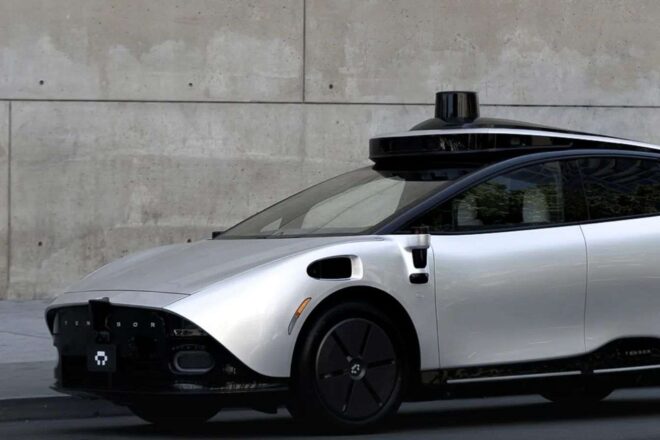
Tensor has introduced its new robotaxi, marking the company’s entry into the consumer autonomous vehicle market. This latest unveiling signals a step forward in making self-driving transportation more accessible to the general public.
Tl;dr
Shifting Identities in Autonomous Vehicle Ambitions
A notable stir swept through San José this week as the company now known as Tensor stepped into the spotlight. Introducing itself as an « enterprise leader in AI agents », Tensor made headlines by revealing its first-ever autonomous vehicle intended for private ownership. This bold move directly targets an industry where expectations are high and announcements frequent, yet tangible results remain rare.
The AutoX Connection: Unveiling Origins and Motives
Yet, beneath the surface of this grand debut, questions quickly emerged regarding the firm’s actual background. While Tensor highlights global offices in places like Barcelona, Singapore, and Dubai, it remains conspicuously silent about any ties to China or affiliations with established companies in the sector. A closer examination of trademark filings from earlier this year points unmistakably toward a direct link with AutoX, a Sino-American pioneer recognized for breakthroughs in autonomous driving. Eventually, after some initial reluctance, a spokesperson acknowledged: « AutoX is now the Tensor brand; all China-based activities have been closed and sold off. » Industry observers suspect this rebranding is designed, at least in part, to sidestep increasing U.S. scrutiny on Chinese technology firms.
A Closer Look at the Technology and Timeline
Turning to the product itself, details released by marketing head Amy Luca position the vehicle as « a personal embodied agent that moves you around. » Clearly tapping into the current enthusiasm for generative AI, the car’s specifications are striking:
11 radars and 10 ultrasonic sensors to detect obstacles;
22 microphones capturing ambient sounds.
With a projected commercial rollout slated for 2026 across the United States, Europe, and the Middle East, anticipation is mounting—though not without a measure of skepticism.
A Market Still Waiting for Delivery
To date, industry giants such as Tesla and GM have repeatedly promised imminent breakthroughs in privately owned self-driving vehicles. Yet, despite years of lofty pledges—each one insisting their technology is just over the horizon—the reality has stubbornly refused to match the rhetoric. As dazzling as these technical feats appear on paper, fundamental issues linger: actual costs, proven reliability under real-world conditions, and unresolved legal responsibilities. The marketplace remains suspended between promise and performance; only genuine progress will determine whether these visions finally leave behind speculation—and shift into gear.