Google and HTC Join Forces to Redefine the Future of Smart Glasses
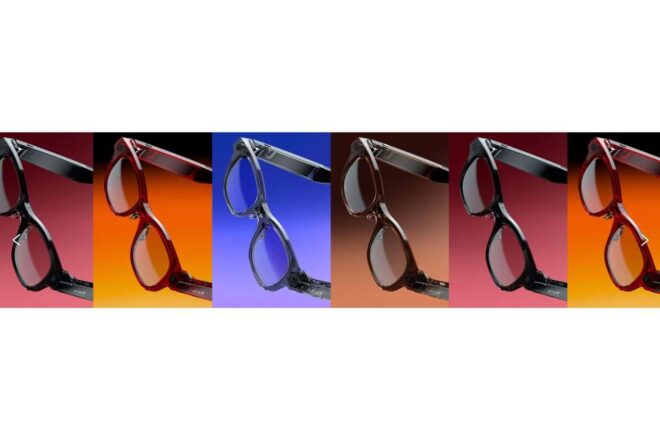
Google and HTC have joined forces to reshape the smart glasses landscape. By combining Google’s advanced software expertise with HTC’s innovative hardware capabilities, the partnership aims to deliver a new generation of intelligent eyewear to the global market.
Tl;dr
Global Stakes in the AI Glasses Race
As competition heats up worldwide for the next generation of connected devices, a new twist has emerged: according to several industry insiders, Google has just wrapped up the design of its inaugural pair of smart glasses boasting advanced artificial intelligence features. The American tech giant has yet to finalize a manufacturing partner. Nonetheless, attention is firmly fixed on Taiwan—specifically, a rivalry between two major players: HTC and Quanta, both eager to secure their place in this nascent market.
HTC’s Strategic Maneuvering and Tech Assets
Interestingly, while contract manufacturing no longer sits at the heart of HTC‘s business model, recent moves suggest the company is angling for a comeback. Their latest product, the Vive Eagle smart glasses, exemplifies this ambition. Notably, these devices are manufactured entirely within Taiwan—a point of pride and strategic importance. Adding complexity to the landscape, HTC recently transferred specialized augmented and virtual reality talent, alongside non-exclusive patents worth $250 million, to Google. Whether this represents a one-off deal or signals a deeper partnership remains an open question for industry analysts. After all, it follows an earlier transfer of the Powered by HTC smartphone division to the same Silicon Valley titan.
Potential Industrial Impact in Taoyuan
Securing a subcontract with Google, should it materialize, could prove transformative for HTC. Even if third-party manufacturing isn’t its primary focus anymore, the company’s prowess—demonstrated by the Vive Eagle—remains undeniable. Such a contract would not only maximize output at its facility in Taoyuan, near Taipei, but could also pave the way for broader operational expansion.
Pioneering Innovation from Taiwanese Models
From a technology standpoint, the Vive Eagle brings more than incremental improvements. For starters, these are the first AI-powered glasses to offer voice command functionality in traditional Chinese—a breakthrough for native speakers. Moreover, they’re built on an open AI architecture that lets users tailor their digital assistants by choosing among leading language models such as Google Gemini or OpenAI’s GPT. This development suggests that we may be witnessing the formation of a distinctly Asian ecosystem around intelligent wearables—one where user flexibility is front and center.
To summarize key advancements:
Ultimately, as alliances shift and technologies converge, Taiwan’s role appears increasingly pivotal in shaping how we’ll interact with smart eyewear—and perhaps with digital intelligence itself—in years to come.