Rising RAM Prices: Hidden Threat to Computer Industry
ADN
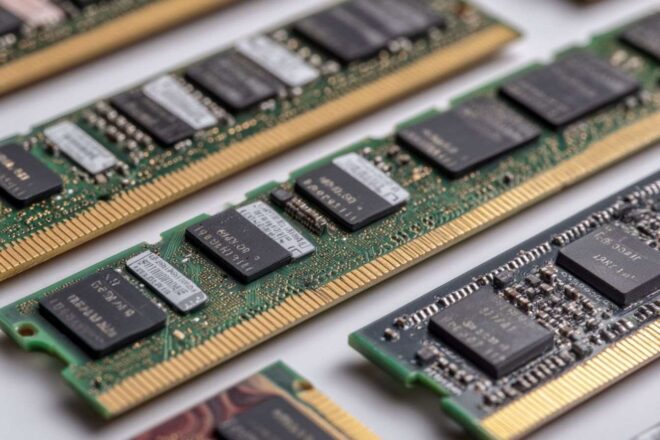
Soaring prices for computer memory are raising alarms within the tech industry, as experts warn that underestimated cost increases could pose significant challenges for both manufacturers and consumers in an already volatile global technology market.
TL;DR
- AI boom drives sharp increase in RAM prices.
- Production dominated by few firms, causing bottlenecks.
- Europe remains heavily dependent on imports for RAM.
Strategic Shortcomings in European Memory Chip Supply
Despite being home to semiconductor giants like ASML and STMicroelectronics, Europe finds itself largely sidelined when it comes to the production of RAM. This gap has become particularly evident as recent market volatility exposes the continent’s deep reliance on imports from Asia and the United States. The resulting trade deficit—estimated at between 8.5 and 17 billion euros annually for these critical components—has stirred growing concern among policymakers.
Efforts are underway through the European Chips Act (ECA), which aspires to capture 20% of the global semiconductor market for Europe. Yet, implementation lags significantly, especially regarding the crucial memory sector. The lingering question is whether the EU can mobilize quickly enough to secure technological sovereignty amid intensifying global competition.
A Market Upended by AI-Driven Demand
The past few weeks have witnessed a remarkable spike in global memory chip prices, with certain lots—especially DDR5 and HBM3—quadrupling or even quintupling in cost. The primary force behind this surge? A dramatic uptick in demand, fueled largely by the swift adoption of advanced artificial intelligence applications. As explained by economist Julien Pillot (INSEEC Grande École), high-performance architectures essential for AI training, such as supercomputers, are now heavily reliant on premium memory like HBM3, while DDR5 continues to equip most mainstream computing devices.
Bottlenecks and Industrial Dilemmas: Why Prices Keep Rising
Behind these headline-grabbing price hikes lie structural challenges rooted in industry concentration. Three companies—SK Hynix, Samsung, and Micron—control a staggering 93% of global memory production. As demand surges unexpectedly, these industry leaders must dip into reserves while also weighing hefty investments in new manufacturing capacity—a process fraught with risk if the market later contracts.
Several factors explain this cautious approach:
- The long lead time and immense cost required to expand factories.
- The temptation to prioritize higher-margin products like HBM3 over DDR5.
- The possibility of future overcapacity if demand abruptly cools.
This measured expansion perpetuates supply constraints, creating ripple effects across electronics supply chains and potentially lengthening delivery times for some products.
An Uncertain Outlook for Consumers and Manufacturers Alike
How much of this turmoil will spill over into retail prices for laptops, smartphones or gaming rigs remains uncertain. The answer hinges on the strategic choices of device manufacturers: some may pass rising costs directly onto buyers, while others could absorb losses to protect their market share. Much depends on fluctuations in other component prices, inventory management strategies, and ultimately consumers’ willingness—or ability—to pay more.
The upshot? A landscape marked by uncertainty—and a reminder that technological progress often brings its own set of complications.