Authentic Venetian Frittelle Recipe: Traditional Italian Carnival Donuts
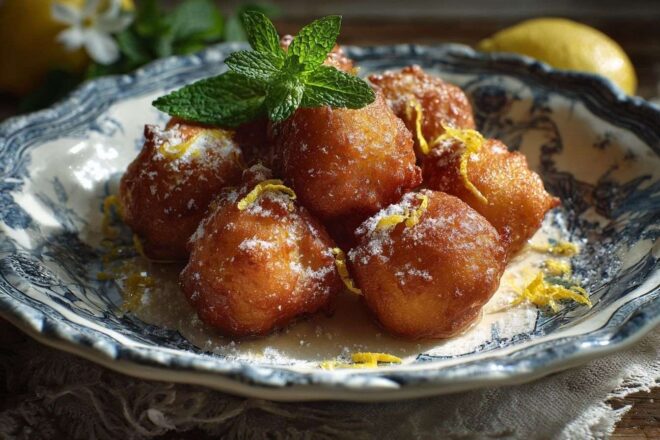
Délicieuses frittelles servies dans une assiette élégante, ornées d'une branche de menthe fraîche et de zestes de citron.
Venetian fritters are a beloved treat enjoyed during carnival season in Venice. This article explores the essential ingredients and techniques needed to craft these traditional pastries at home, capturing the authentic flavors and textures that define this iconic Italian dessert.
TL;DR
- Venetian frittelle are a Carnival pastry tradition.
- Centuries-old recipes preserved by dedicated pastry chefs.
- Homemade versions can capture the festive spirit anywhere.
The Golden Symbol of Venice’s Carnival
Strolling through Venice in January, one cannot help but notice the alluring presence of golden orbs—frittelle—piled high in the windows and on the counters of age-old pastry shops such as Pasticceria Nobile and Tonolo. These delicate, sugar-dusted fritters are more than just a sweet treat; they have become the edible soul of the city’s renowned Carnival. Locals and travelers alike eagerly gather around bustling counters, often enjoying their frittelle while standing, espresso in hand.
A Recipe Rooted in Centuries of Tradition
Delving into their history reveals that frittelle are far from a passing fad. Their origins trace back to the fourteenth century, with famed cooks like Maestro Martino making early mentions. For centuries, only members of a specialized Venetian guild—the “fritoleri”—held the privilege to craft these pastries, passing their craft down through generations until the end of the Venetian Republic. By the eighteenth century, frittelle had achieved status as the official dessert of Carnival.
Today, although the ancient fritoleri have vanished, veteran pastry chefs such as Claudio at Nobile, who boasts four decades at his craft, safeguard this heritage. He points out that achieving perfection demands a fine balance: an airy dough allowed to rise fully and a brief, precise fry—never longer than five minutes—to ensure a moist crumb and crisp golden crust.
The Unique Joy Behind Each Bite
What makes each frittella special lies beneath its sugary exterior. The dough—a mix of flour, milk, eggs, sugar and sometimes butter—is often livened up with raisins or pine nuts for extra flavor. Shape is never uniform; rather, each fritter is gently dropped into hot oil at exactly 160–170°C for just moments before being rolled in sugar.
Those keen to try their hand at homemade frittelle should keep several tips in mind:
- Let your dough rise thoroughly for aroma and softness—citrus zest works wonders.
- Keep your frying oil at a steady temperature to avoid burning.
- Fry only a few at once for fluffiness and lightness.
The Festive Spirit Beyond Venice
Admittedly, savoring freshly made frittelle along a misty Venetian canal has its own charm. Yet recreating this tradition at home allows anyone to channel some of Italy’s joyful Carnival atmosphere into their own kitchen. Ultimately, it is this spirit—generosity mingled with celebration—that gives every frittella its magic.