Raw vs Cooked Radishes: Which Is Healthier for You?
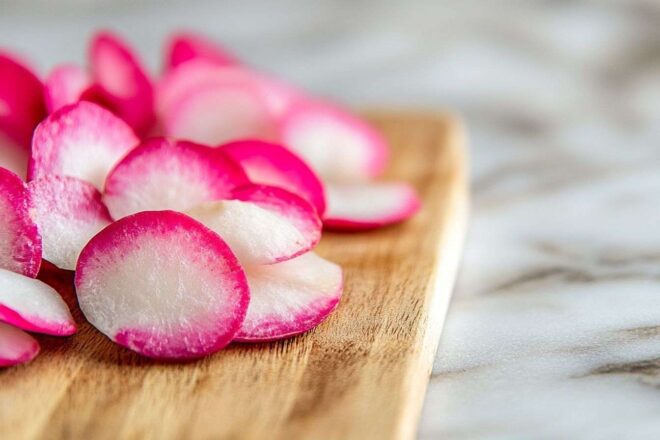
Gros plan de radis roses et blancs vifs
As interest grows in healthy eating habits, many are questioning whether raw or cooked radishes provide greater nutritional benefits. Exploring how preparation methods affect their health properties can help consumers make more informed dietary choices.
TL;DR
- Raw and cooked radish offer unique nutritional benefits.
- Preparation methods influence antioxidants and vitamin retention.
- Radish supports liver, inflammation, cholesterol, and glycemia.
The Versatile Radish: Much More Than a Salad Crunch
While often overlooked in the colder months, the humble radish—sometimes called mooli—has quietly become a fixture on winter tables. Its versatility is apparent whether tossed raw into salads or simmered gently in broths. Yet beyond its crisp bite and occasional pungency lies an impressive array of health properties that shift depending on how it’s prepared.
Nutritional Benefits of Raw Radish
Enjoying radishes raw maximizes their contribution of vitamin C, a delicate nutrient easily lost to heat. The same goes for key minerals such as potassium and magnesium—elements essential for wellbeing that are best preserved when the vegetable remains uncooked. Moreover, the satisfying crunch conceals a wealth of active compounds, including glucosinolates and natural enzymes. These molecules play a notable antioxidant role, aiding cell protection and promoting natural detoxification processes. However, moderation is wise: overindulgence can sometimes cause mild digestive discomfort.
The Subtle Science of Cooking Radish
Cooking transforms the radish both in taste and nutritional profile. Steaming or roasting softens its sharp flavor—a boon for those sensitive to its spiciness—while also altering its antioxidant potential. Several studies suggest that certain cooking methods can boost the total phenol content and increase antioxidant activity in radishes. Experiments with animal models even point to cooked radish extracts reducing hepatic oxidative stress. Still, boiling remains less advantageous; pouring away the water means losing valuable water-soluble vitamins.
A Complementary Approach to Preparation
No clear winner emerges between raw or cooked forms—they bring different assets to the table rather than being rivals. In fact, integrating both approaches throughout the week lets you benefit from the full spectrum of what this unassuming root offers.
Several factors explain this choice:
- Anti-inflammatory effects
- Liver support
- Regulation of cholesterol and blood sugar levels
Ultimately, alternating between raw and cooked preparations ensures not only maximum nutrition but also variety—a reminder that balance can be delicious as well as healthy. In short: don’t underestimate the bright pink-and-white radish, especially when seeking both pleasure and dietary equilibrium.