Greek Koukouvagia Recipe: Tomato and Feta Bread Explained
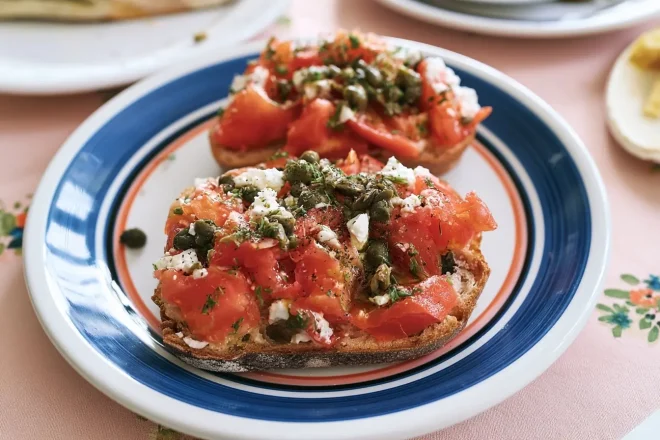
Koukouvagia is a traditional Greek open-faced sandwich featuring ripe tomatoes and creamy feta cheese. This simple yet flavorful dish highlights the fresh ingredients and vibrant culinary culture of Greece, making it a popular choice for light meals or appetizers.
TL;DR
- Simple Cretan dish combines bread, tomato, feta, olives.
- Koukouvagia also known as dakos; curbs food waste.
- Recipe highlights resourcefulness in traditional Greek cuisine.
A Cretan Classic: Koukouvagia, the Taste of Simplicity
When it comes to traditional Greek cuisine, few dishes embody rustic ingenuity quite like the *koukouvagia*, also known as *dakos*. Drawing on a handful of modest ingredients—primarily stale bread, ripe tomato, tangy feta cheese, briny capers and olives—this Cretan staple manages to deliver both robust flavor and a subtle lesson in sustainability.
Origins and Meaning
The name *koukouvagia* refers not only to the dish itself but also offers a glimpse into the culinary culture of Crete. Sometimes called “owl” due to its presentation, this specialty is deeply rooted in local traditions that emphasize making the most out of available resources. Rather than discarding leftover or hardened bread, households have long repurposed it as the foundation for this dish—a testament to the island’s age-old commitment to minimizing food waste.
What Makes Koukouvagia Unique?
Several factors explain why this seemingly humble salad stands apart:
- The distinctive use of barley rusks or dried country bread.
- The combination of fresh produce with salty accents from capers and olives.
- The deliberate avoidance of waste by reviving stale staples.
The preparation is delightfully straightforward: thick slices of dried bread are moistened with water or olive oil before being topped with chopped tomatoes and crumbled feta. Capers and Kalamata olives round out the flavors, while a drizzle of extra-virgin olive oil completes the assembly.
Cultural Impact and Modern Appeal
Across Crete—and increasingly beyond its borders—*koukouvagia* endures not merely as a summertime favorite but also as an emblem of resourceful Mediterranean eating. In a world increasingly concerned with sustainability, this dish offers both an appetizing bite and an important message. The use of simple components transformed into something greater speaks to the enduring wisdom found in traditional recipes. For those who appreciate both taste and thoughtful consumption, *koukouvagia* is certainly worth discovering.