AI and Talking Cars: The Future of Driving?
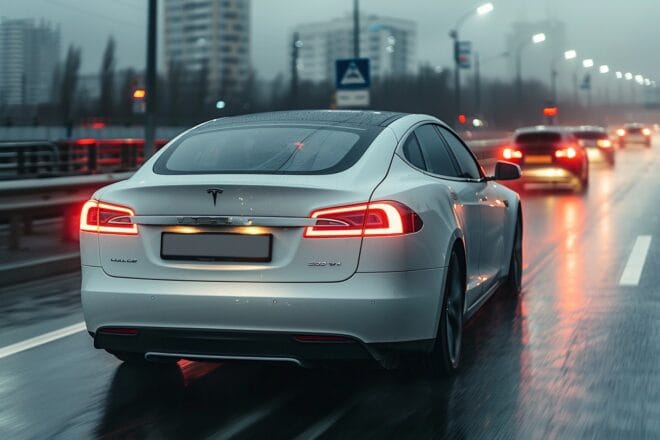
OpenAI's GPT-4 has been tested in a real-world autonomous driving scenario. Are you curious about its performance?
A Realistic Futuristic Vision: Conversing with Autonomous Vehicles
In the modern era of technological progress, artificial intelligence (AI) has made significant strides, particularly in machine learning and large-scale language models (LLM). These advancements could soon redefine how we travel.
From Science Fiction to Reality
Remember K.I.T.T., the AI-powered talking car from the TV show “Knight Rider”? What once seemed like sheer fantasy is edging closer to reality. Recent research showcased at the 27th IEEE International Conference on Intelligent Transportation Systems introduced a conversational AI system named Talk2Drive, based on an LLM framework, that can interpret human commands to direct autonomous vehicles (AV).
The Spread of Autonomous Vehicles
Autonomous vehicles, which navigate using AI and cameras, are already a reality. Cities like San Francisco, Beijing, Phoenix, and Wuhan stand as evidence. Furthermore, Goldman Sachs Research predicts that by 2027, about 30% of all new vehicle sales will be partially autonomous vehicles. Additionally, Statista projects that by 2025, 73% of all vehicles in the UK will have some level of autonomy.
Conversing with an Autonomous Vehicle
Moreover, researchers from Purdue University have implemented their Talk2Drive framework into a 2019 Lexus RX450h to conduct various tests. “Real-world experiments have proven that the proposed system can understand human intentions at different levels of intuition,” they reported.
The tests demonstrated a significant reduction in driver takeover rates, with up to 78.8% on highways, 66.7% at intersections, and up to 100% reduction in parking scenarios. Adding a memory module decreased the rate of driver interventions by up to 65.2% compared to systems without such a module.
In light of these findings, one question remains: will we soon be conversing with our autonomous cars? Given industry projections, it appears this possibility is rapidly becoming a reality.