AI Supercomputer Creates Ultra-Realistic Virtual Human Brain Model
ADN
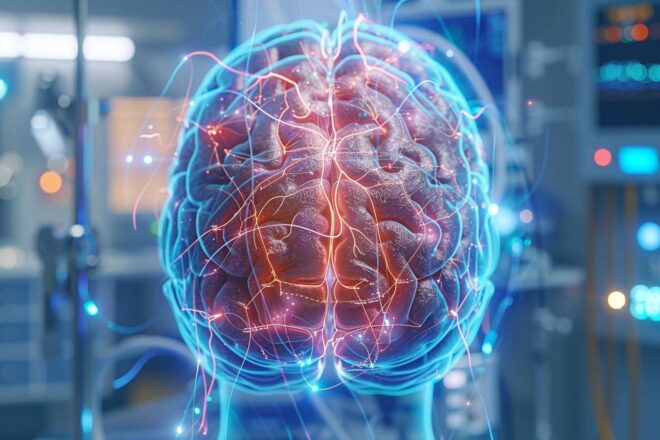
A groundbreaking advance in computing has enabled the creation of a virtual brain with an unparalleled level of realism, thanks to the power of a state-of-the-art supercomputer. This achievement marks a significant milestone for neuroscience and artificial intelligence research.
TL;DR
- Full mouse brain digitally simulated by research team.
- Project powered by Japan’s Fugaku supercomputer.
- Paves way for human brain modeling, disease study.
A Leap Forward in Brain Modeling
While the secrets of the brain have long eluded science, a recent achievement marks a significant turning point. Joint teams from the Allen Institute in the United States and the University of Electro-Communications in Japan have succeeded in creating a digital simulation of an entire mouse cortex. This unprecedented step, made possible through advanced technology and international collaboration, may dramatically reshape how we study neurological diseases and understand cognition.
The Powerhouse Behind the Simulation
At the heart of this breakthrough lies the formidable Japanese supercomputer Fugaku. Known for driving discoveries across scientific fields—from drug development to astronomy—Fugaku was tasked this time with an ambitious challenge: simulating a complete neural network. Under the guidance of Professor Tadashi Yamazaki, researchers managed to model nine million neurons interacting through twenty-six billion synapses across eighty-six interconnected brain regions. To put that feat into perspective, a mouse’s entire brain contains about seventy million neurons compressed into an almond-sized space. Such computational strength allowed scientists to visualize complex neuronal interactions on a scale previously unimaginable.
Transforming Brain Research Methodology
What distinguishes this model is not just its scale but its versatility as a scientific tool. For the first time, researchers can observe three-dimensional, real-time dynamics within brain tissue—tracking phenomena such as epileptic seizures or waves linked to attention without resorting to invasive procedures. To manage these vast streams of data, new software was developed specifically to analyze cerebral signals efficiently. Several factors explain this decision:
- Exploring how both hemispheres synchronize activity;
- Testing new hypotheses about neurological disorders’ underlying mechanisms.
Toward Human Brain Simulation?
This achievement has already sparked excitement in the scientific community as a potential stepping stone toward simulating larger and more intricate brains—including our own. Anton Arkhipov of the Allen Institute notes that with adequate computational resources, full-brain simulations are now within reach. The ultimate ambition remains: constructing a comprehensive digital model of the human brain. Each milestone like this one brings us closer to unraveling—and perhaps repairing—the complexities of our most enigmatic organ.