AI Vision Experts Turn Their Focus to Neural Demands and Requirements
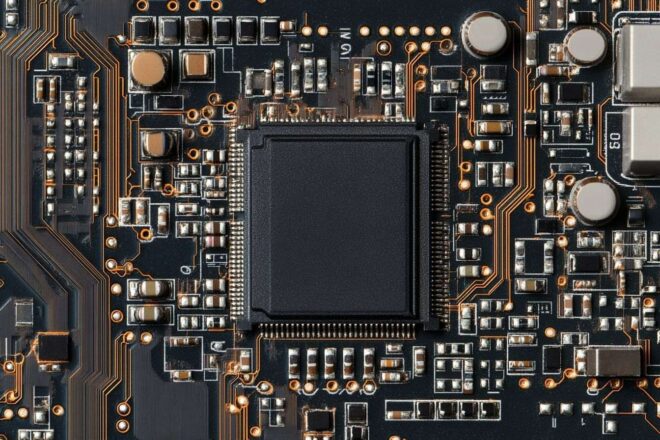
AI vision experts are turning their attention to the neural requirements that underpin machine perception, analyzing how artificial systems process visual information and exploring the fundamental computational demands needed for effective image interpretation.
Tl;dr
- NPUs outperform GPUs for modern AI in IoT.
- Dedicated chips enable precise, multimodal data processing.
- Collaboration democratizes embedded AI across industries.
A Shift from GPU to NPU: Rethinking AI Hardware
In the ever-evolving landscape of artificial intelligence (AI) within the realm of IoT, hardware demands are undergoing a profound transformation. For years, GPUs remained the backbone for training sophisticated AI models. Yet, as applications become more demanding—especially at the network edge—limitations of these traditional architectures are becoming apparent. During the recent IoT Solutions World Congress in Barcelona, it was Nicholas Gaude, marketing lead for AI at STMicroelectronics, who frankly voiced skepticism about relying on standard GPUs for future needs.
The Rise of Specialized NPUs
Instead, attention is increasingly shifting to the NPU (Neural Processing Unit). As outlined by Gaude, «L’intérêt du NPU réside dans sa capacité à accélérer et traiter efficacement le réseau IA». These purpose-built processors not only excel at managing complex neural networks, but also deliver unparalleled precision in computer vision tasks—a crucial capability as image and video analysis become central in IoT devices. Unlike their GPU counterparts, often limited to basic or low-resolution use cases, NPUs can support advanced, high-resolution, multi-modal processing.
This evolution brings several concrete benefits:
The Collaborative Drive Behind Embedded Innovation
However, such a technological leap does not occur in isolation. The synergy between hardware designers and software engineers has never been more critical. As Francesco Mattioli, an engineer at Ultralytics, put it: «Miser sur un chip spécialisé permet une exécution ultra-rapide des programmes IA». His company’s collaboration with STMicroelectronics is emblematic—one side focusing on crafting tailored chips, while the other fine-tunes neural networks to harness this new power.
Notably, this partnership model accelerates what some describe as a true democratization of AI:
- Easier access: Even without advanced expertise, organizations can now train and deploy models directly onto physical devices.
- Sparked innovation: Smaller firms rapidly integrate automatic detection into their business solutions.
The Road Ahead: Accessible Embedded AI for All?
Clearly, we stand on the cusp of a paradigm shift. No longer are advances in embedded AI reserved solely for tech giants or research labs. Thanks to increasingly accessible and potent NPUs, a broad spectrum of industries may soon benefit from faster, more accurate—and crucially—more approachable AI integration than ever before. In this changing environment, those who embrace specialized hardware and collaborative development may well set the pace for tomorrow’s intelligent edge solutions.