Airbike Volonaut: A Sci-Fi Speeder on a Quest for Real-World Connectivity
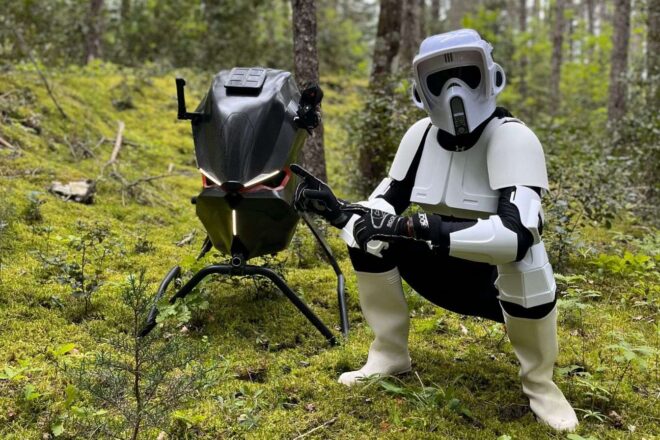
The Airbike Volonaut brings futuristic, science-fiction-inspired speeder technology into the present, aiming to establish practical connections within real-world transport networks. This innovative vehicle is seeking pathways to integrate advanced mobility into everyday infrastructure.
Tl;dr
A Flying Bike Straight Out of Science Fiction?
When the Polish startup Volonaut chose to reveal its first-ever airbike prototype, the calendar was no coincidence. Announced on the eve of May 4th—a nod to the « Star Wars » fandom—the debut instantly conjured images of speeders gliding over Tatooine’s dusty plains. For many, it felt like fiction coming to life, although beneath this clear cinematic wink, fundamental questions immediately surfaced. The slick promotional video ignited excitement, but also skepticism: not a single shot revealed actual take-off or landing.
An Audacious Design Built for Speed
At the project’s helm stands Tomasz Patan, a determined Polish entrepreneur who has long chased the dream of a genuine “flying bicycle.” Determined to break from previous, often clunky attempts, he adopted a bold path: abandoning conventional propellers in favor of a radical solution. The result? Jet propulsion enabling speeds that reportedly reach up to 200 km/h. This technological leap—if validated—could reshape our understanding of personal aerial transport.
The airbike’s construction is equally striking. Thanks to a fusion of carbon fiber and advanced 3D printing techniques, its structure is said to be seven times lighter than a standard motorcycle. And in an era where safety can’t be overlooked, Volonaut integrates automatic stabilization governed by its proprietary flight computer. Their rationale seems straightforward:
The Challenge Behind the Hype
Still, early enthusiasm should be tempered by realism. The vehicle remains firmly at the prototype stage, emerging only recently from a lengthy phase of quiet development. Patan himself is candid about setbacks: « Months of relentless effort, countless challenges overcome and multiple failures along the way », he admits. Crucially, key technical details—including potential onboard communication and navigation systems—are conspicuously absent from public documentation.
Moreover, as Volonaut’s project edges into the public eye, it faces mounting pressure to turn evocative visuals into verifiable breakthroughs. That viral teaser demonstrates that the allure of individual flight hasn’t waned; however, convincing skeptics will require more than cinematic flair or evocative nostalgia.
The Future for Personal Aerial Mobility?
Ultimately, by tapping into collective childhood dreams and leveraging technical bravado, Volonaut captures imaginations—but must now deliver proof beyond sleek marketing. As anticipation builds, one question lingers: will this vision soar above science fiction and become a new benchmark for personal mobility? For now, only time—and perhaps another dramatic reveal—will tell.