Alibaba Unveils Qwen3-Coder, Ushering in a New Era for Software Development with Next-Gen AI
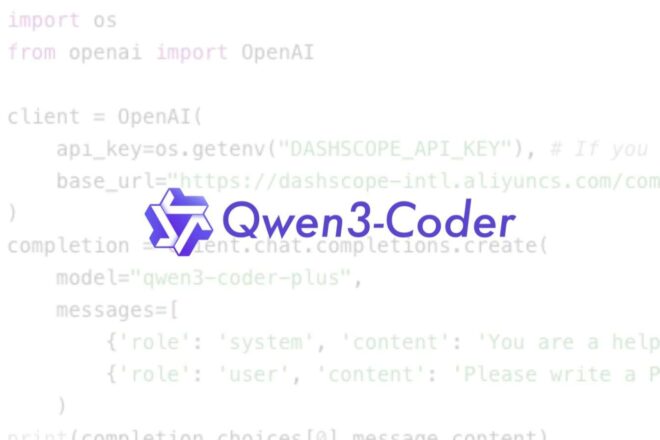
Alibaba has unveiled Qwen3-Coder, its next-generation artificial intelligence model designed to transform the software development process. This latest innovation demonstrates Alibaba’s commitment to advancing AI-powered coding solutions within the rapidly evolving tech industry.
Tl;dr
- Alibaba launches advanced open-source AI coding model Qwen3-Coder.
- Innovative MoE architecture powers large-scale, efficient code generation.
- Over 20 million global downloads highlight widespread adoption.
An Expanding Ecosystem: Integration and Openness
As the landscape of AI-driven software development shifts, Alibaba is aiming to position itself at the heart of the change. The company’s latest offering, the Qwen3-Coder, isn’t just a technical leap—it’s being woven into a broad ecosystem. Developers eager to integrate cutting-edge tools now find support on multiple fronts: not only is Qwen3-Coder accessible via Hugging Face and GitHub, but an interface called Qwen Code allows natural language task delegation directly from the command line. For those seeking more tailored access, APIs are available through Model Studio, Alibaba‘s proprietary platform dedicated to generative AI.
Further cementing its reach, seamless compatibility with tools like Claude Code gives professionals even greater flexibility. In-house innovation hasn’t lagged either—Alibaba Cloud‘s developer assistant Tongyi Lingma is already leveraging these advances. Since launching its « IA Programmer » feature in June 2024, Tongyi Lingma has generated over three billion lines of code, underscoring both scale and impact.
Pushing Technical Boundaries: Architecture and Performance
The real engine behind this progress is the innovative Mixture-of-Experts (MoE) architecture at the core of the flagship model, Qwen3-Coder-480B-A35B-Instruct. This impressive system boasts a staggering 480 billion parameters—yet interestingly, only 35 billion are activated per processed token. The result? A balance between sheer computational power and efficiency rarely seen in open-source solutions.
Benchmarks reveal Qwen3-Coder’s prowess across challenging tasks such as agentic coding or automated tool use; it stands shoulder-to-shoulder with sector leaders. Notably, its context window—256,000 tokens by default and scalable to one million—enables handling vast codebases within a single interaction. These feats are owed not only to extensive pre-training on massive datasets but also to inventive post-training methods like long-term reinforcement.
A Measurable Global Impact
But does all this translate into real-world traction? Early figures suggest it does: models built on Qwen have already surpassed 20 million global downloads. Clearly, developers worldwide see value in powerful, open-source platforms that slot easily into diverse workflows.
For those navigating today’s fast-evolving software landscape, Alibaba‘s initiative may signal more than just technical progress—it reflects a strategic ambition to shape how AI-driven development unfolds worldwide.
The Road Ahead for AI-Powered Coding
In summary, the arrival of Qwen3-Coder marks a noteworthy shift in how developers can leverage artificial intelligence. Highlights include:
- Sophisticated code generation: Expanded autonomy and efficiency for users.
- Ecosystem integration: Streamlined access via CLI tools and APIs.
- Open-source adoption: Rapid growth indicates strong industry demand.
If momentum continues at this pace, Qwen3-Coder could well set new standards—not just for Alibaba, but for the broader world of software engineering augmented by artificial intelligence.