Apple Faces French and European Scrutiny Over App Tracking Transparency Abuse
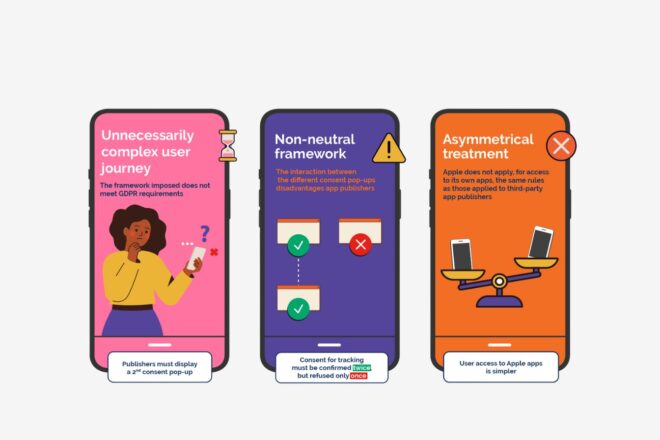
The Competition Authority, with the support of the CNIL, has issued a landmark decision, fining Apple 150 million euros for abusing its dominant position through its ATT framework, thereby balancing privacy and competition. Does this make Apple more ethical?
The Challenge of Apple’s ATT Framework
Launched on April 26, 2021, with iOS and iPadOS version 14.5, Apple’s App Tracking Transparency (ATT) framework marked a significant step in privacy protection, requiring third-party apps to obtain user consent before tracking them for advertising. Yet, this policy soon provoked severe backlash, particularly from the French advertising sector, which criticized it as excessive and unfair.
Implementation Deemed Discriminatory
Following a detailed investigation from March 2021 to March 2025, France’s Competition Authority concluded that Apple’s ATT implementation was neither necessary nor proportionate. The decision highlighted issues such as artificial complexity, asymmetrical treatment, neutrality breaches, and adverse effects on small publishers.
The Verdict: Fine and Cooperation
Apple faced a €150 million fine for a violation lasting two years and three months, signaling a significant shift in the balance between privacy defense and fair competition.
This case also showcased unprecedented cooperation between CNIL and the French Competition Authority, aiming for a digital ecosystem that is fair, transparent, and respects consumer rights.
A Strong Signal for Suitable Regulation
This outcome sends a strong message to major digital platforms in Europe: regulation is evolving and coordinating to preserve innovation, diversity, and fundamental user rights. While Apple’s rules aimed to enhance privacy, they should not create unfair conditions.
Although the Competition Authority convincingly demonstrated that Apple’s ATT implementation negatively impacted competition through its asymmetry, complexity, and effect on third parties, it is crucial to acknowledge that the underlying principle of enhancing user privacy remains unchallenged. The criticism focuses on Apple’s specific operationalization of this principle, which significantly distorted competition. (Apple may appeal this decision.)