Ariane 6 Launch: Exploring the Roles of the Newly Deployed Next-Generation Satellite
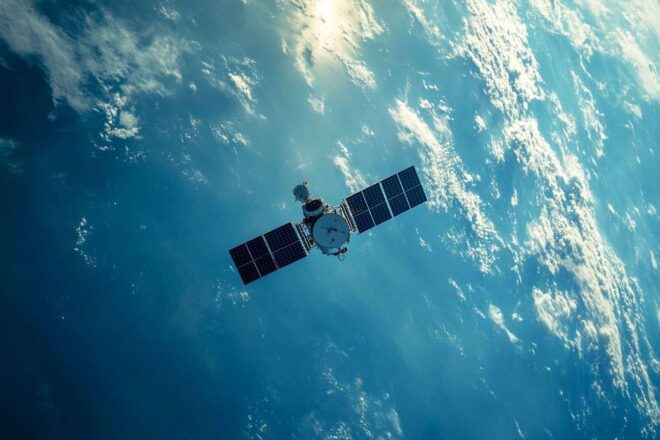
Ariane 6 has recently completed its inaugural launch, deploying a next-generation satellite into orbit. This milestone raises questions about the planned applications for the advanced satellite, as experts consider its potential roles across communications, Earth observation, and scientific research.
Tl;dr
Renewed Momentum for Europe’s Space Sector
This week, beneath the tropical skies of French Guiana, the European heavy-lift launcher Ariane 6 took another significant step in its short but promising operational life. The latest launch, conducted flawlessly from the Kourou spaceport at precisely 9:37 pm local time on Tuesday, further cements Europe’s ambitions in a field often dominated by global giants. Since its inaugural flight in July 2024, this marks the third successful mission for the new workhorse of the continent’s space industry.
A Precision Leap in Meteorological Observation
Riding atop Ariane 6 was an essential payload: the nearly four-tonne meteorological satellite MetOp-SG-A1. Designed to improve both weather forecasting and our grasp of climate trends, this satellite is the first of a new generation destined for polar orbit. Commissioned by the European Organisation for the Exploitation of Meteorological Satellites (Eumetsat) and built by Airbus Defence and Space, MetOp-SG-A1 now circles about 800 kilometers above Earth in a sun-synchronous trajectory.
Of particular note among its six onboard instruments is the advanced infrared sounder, IASI-NG. This device sets a new benchmark, measuring atmospheric temperature and water vapor with twice the precision of previous models. As a result, MetOp-SG-A1 will monitor sixteen crucial climate variables—from greenhouse gases to cloud cover—helping refine scientific models and public forecasts alike.
Crowding the Skies with European Innovation
But Ariane 6’s latest flight did not just carry routine cargo. Also aboard was Sentinel-5, part of the well-known Copernicus initiative. Sentinel-5 aims to track major atmospheric pollutants and stratospheric ozone—data only accessible through observation from space. This mission complements Europe’s growing arsenal of high-tech tools serving environmental monitoring and policy.
In practical terms, these advances mean that agencies can now:
The Road Ahead: Ambition Meets Opportunity
« Third launch, third success! » declared David Cavaillolès, chief executive of Arianespace, following Tuesday night’s achievement. As if echoing Europe’s rejuvenated confidence, he confirmed: « Our target is nine to ten launches each year. » The return to flight of another European light launcher, Vega-C, after a lengthy technical pause underscores this resurgence.
With thirty-two launches already scheduled on its manifest, Ariane 6 is not only consolidating its place at Kourou but also signaling Europe’s intent to stay firmly in the race for access to space—on its own terms.