AWS Ushers in Data Center Revolution with Liquid Cooling for AI at the Source
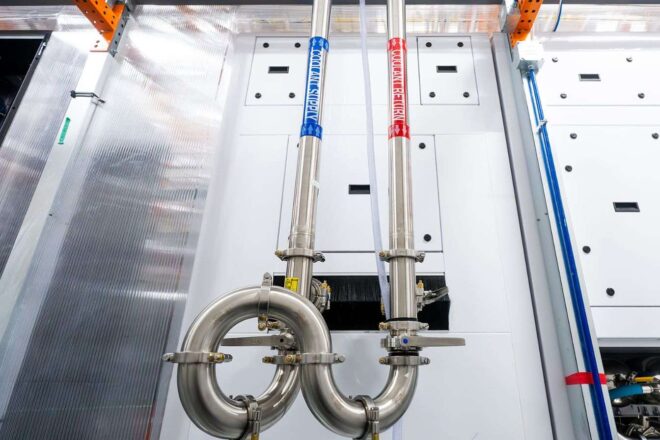
As artificial intelligence drives soaring demand for computing power, AWS is implementing liquid cooling solutions directly within its data centers. This innovative approach aims to efficiently manage heat generated by powerful AI hardware, signaling a new era in data center operations.
Tl;dr
- AI drives AWS to shift from air to liquid cooling.
- Custom chip-to-cold plate system built in record time.
- Modular, scalable design anticipates future tech demands.
The Pressure of AI: Rethinking Data Center Cooling
As the era of artificial intelligence accelerates, data centers have found themselves grappling with unprecedented technical demands. Traditional methods—most notably, cooling racks with circulated air—are proving woefully inadequate for today’s ultra-dense chips that compute at breakneck speed. This stark reality confronted AWS head-on: in order to fuel the next wave of AI innovation, conventional approaches needed a radical rethink.
The Move From Air to Liquid: A Technological Imperative
Up until recently, the flow of cool air among servers was sufficient to dissipate heat from electronic components. However, as AI workloads become ever more concentrated—to reduce latency and control energy usage—the limits of this approach have been laid bare. According to Dave Klusas, Senior Cooling Systems Leader at AWS, « We’ve reached a point where liquid is more cost-effective for heat extraction ». The rationale behind this decisive shift rests on several pillars:
- Liquid density: Far greater than air, allowing it to absorb substantially more heat.
- Technological pace: Solutions must remain flexible as hardware evolves rapidly.
- Energy efficiency: Essential for cost containment and reducing environmental impact.
A Custom System Delivered at Unprecedented Speed
Faced with a market lacking suitable options, AWS initiated an ambitious in-house project. The result? A bespoke “chip-to-cold plate” approach, channeling coolant directly across each chip using tailored cold plates. The technical fluid circulates in a closed loop, discharging excess heat externally without hiking up overall water consumption—a feat not to be overlooked. Remarkably, the team transformed this vision into a working prototype in just four months and delivered an operational unit within the year. Such agility stemmed from a willingness to reconsider every aspect—design, procurement strategies, embedded software, and relentless testing.
Sustainability and Adaptability: Planning for the Long Term
Perhaps most notably, adaptability was woven into the system’s DNA from day one. As Klusas notes, « We’ve engineered an extremely efficient solution deployable wherever demand arises ». With its modular architecture and an intelligently distributed refrigerant network—devised internally by AWS—the company can confidently navigate future technological leaps without facing resource waste or runaway costs. Early results are promising; the rollout is now expanding to additional facilities over the coming summer months.
In sum, this bold bet on custom cooling infrastructure may well set new benchmarks as AI continues its relentless march forward.