China Mobile and Huawei Launch World’s First Beam Tracking Unit Deployment
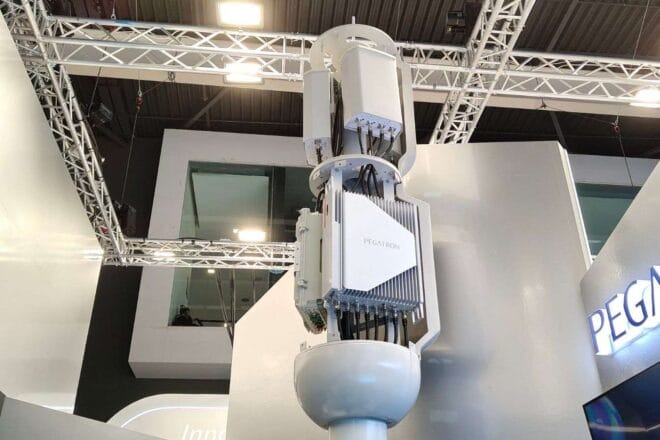
Huawei and China Mobile have achieved a global first by successfully deploying a beam tracking unit, marking a significant advancement in technology.
Global First in Mobile Network Technology
A significant breakthrough in mobile network technology has been achieved in China through a partnership between China Mobile and Huawei. These tech giants have successfully deployed the world’s first Beam Tracking Unit (BTU) in Shenzhen, Guangdong.
The BTU: A Major Innovation in Mobile Networks
Transitioning from traditional base station antennas to the BTU represents a significant innovation in the mobile network industry. This means that base station components, especially antennas that support network intelligence, are becoming increasingly realistic. This advancement will greatly enhance the global development of network autonomy to Level 4 (L4).
Challenges Posed by Intelligent Networks
Intelligent networks require components capable of automatically obtaining real-time network status and dynamically adjusting for optimization. Base station antennas play a crucial role in this process. However, traditional base station antennas face several challenges:
- The complexity and challenge of verifying topological relationships among multi-frequency antennas, with over 50% of global topologies misaligned or mismatched.
- The challenge of accurately obtaining, verifying, and updating engineering parameters (EP) of antennas, with more than 56% of sector azimuth angles deviating by more than 10°.
- Limited capability for dynamic beam adjustment, with only downtilts being remotely adjustable, failing to meet the needs for flexible optimization in various scenarios.
Three Key Capabilities of the BTU
The BTU, developed jointly by China Mobile and Huawei, offers three key capabilities:
- Error-free real-time topology visualization: Provides 100% accurate mapping of logical cells to internal antenna networks every minute, creating end-to-end visibility and manageability between the BTU, RRU, and BBU.
- Real-time, deviation-free EP information retrieval: Automates the acquisition of EP data from the cell matrix with 100% accuracy based on intelligently mapped topology, providing precise input for network optimization.
- Real-time, multidimensional beam adjustment: Dynamically adjusts beam shapes and directions by the minute, responding to user distribution and service demands. This ensures that the “beam follows people, the network follows activity” in the short term, and “a high-quality network anytime, anywhere” in the long term.
Smart Antennas: A Revolutionary Turning Point
Andy Sun, president of Huawei’s Antenna Business Unit, likens the evolution from traditional base station antennas to intelligent BTUs to the transition from internal combustion engines to autonomous electric vehicles. This transformation marks a significant advance in design, architecture, software, and hardware.
Now, antennas are no longer just devices requiring manual adjustments but have become intelligent units capable of remote and real-time adjustments, thereby facilitating the development of intelligent networks. China Mobile is pioneering this evolution with its concept of “self-intelligent network,” while Huawei reiterates its commitment to innovate and support China Mobile in strengthening its leadership and accelerating the transition to L4 intelligent networks.