China’s Humanoid Robot Race Accelerates Despite Ongoing Challenges
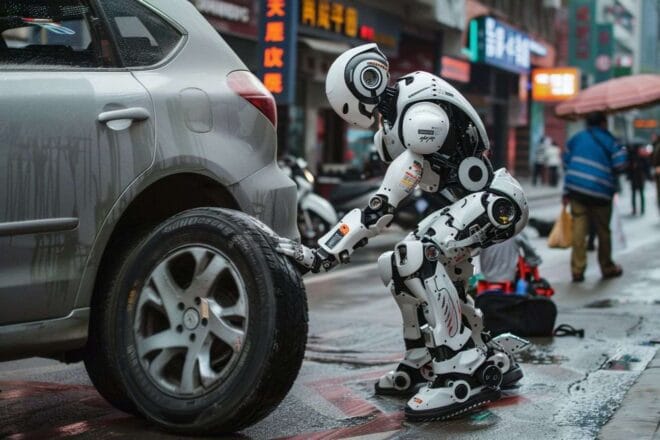
At a global robotics conference, China showcased its ambitions by presenting 27 humanoid robots and announcing record investments, signaling a major push in the future of robotic artificial intelligence.
Robotics Future Unveiled in Beijing
The future of robotics is being shaped in China, as evidenced by the 2024 World Robotics Conference that opened last week in Beijing. The highlight was the showcase of 27 humanoid robots, demonstrating China’s push to lead in next-generation robotic technologies.
This exhibition was particularly striking as 169 companies displayed over 600 products, including 60 new robot models. The number of humanoid robots on display has tripled compared to last year, indicating significant growth.
Growth Fueled by Substantial Investments
China’s robotics sector is thriving thanks to hefty investments. “Investments in the Chinese robotics industry grew from 1.98 billion yuan (about $279 million) in 2019 to 9.74 billion yuan (about $1.37 billion) in 2023.” Market projections suggest that the global AI robot market could surpass $19 billion in 2024.
New robotics companies like UBTECH and Astribot are leveraging this momentum by showcasing advanced robots with diverse capabilities. UBTECH’s humanoid robot Walker S is already employed in Chinese car manufacturing plants, such as those owned by electric vehicle maker NIO. Meanwhile, Astribot’s AI robotic assistant S1 demonstrates skills in calligraphy, sugar painting, and martial arts.
Challenges Hinder Widespread Adoption
Despite these remarkable advancements, industry experts caution about significant challenges. For instance, most robots still struggle with complex movements and multitasking. Additionally, the high production costs make these robots economically impractical for many applications.
Path to Commercialization
AgiBot, a Chinese start-up founded by former Huawei “Genius Youth” recruit Peng Zhihui, recently launched five new humanoid robots. Its flagship series, Yuanzheng A2, stands out for its ability to perform intricate tasks like threading a needle, powered by AI-driven vision and audio processing.
While 2024 is seen as the beginning of the commercialization of humanoid robots, experts believe widespread adoption could take another 3 to 4 years. As we move forward, it will be fascinating to see how these developments unfold and shape our future interactions with robots.