DeepSeek: China’s Bold Move Shakes Up the Global AI Power Structure
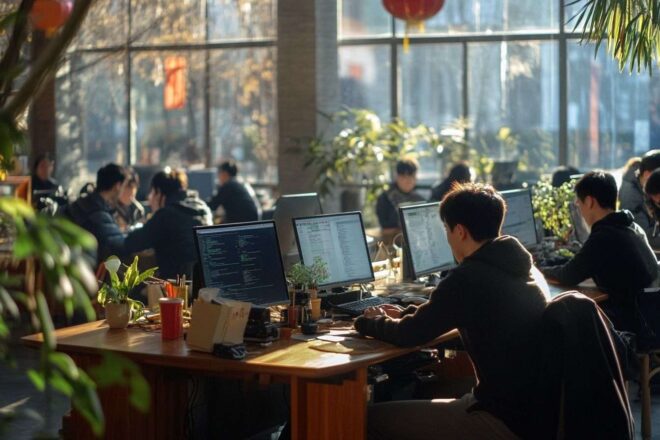
China's DeepSeek is emerging as a formidable player in the artificial intelligence sector, challenging the dominance of established global leaders and signaling a shift in the balance of technological power within the rapidly evolving AI landscape.
Tl;dr
Innovation Under Pressure: DeepSeek’s Meteoric Rise
While the world’s attention often gravitates toward familiar names like OpenAI or Microsoft, January 20, 2025 marked a remarkable turning point for artificial intelligence. In Beijing, as leading experts convened by Premier Li Qiang assessed the state of global AI, a comparatively unknown figure—Liang Wenfeng, an unassuming mathematician from Guangdong—stepped into the limelight. His brainchild, the startup DeepSeek, had just unveiled its flagship model: DeepSeek-R1. This breakthrough didn’t simply match industry standards; it challenged them outright, offering capabilities comparable to GPT-4 for a fraction of the cost—around six million dollars, dwarfing its American rivals’ hundred-million-dollar price tags.
Coping With Constraints: Technical Ingenuity Amid Sanctions
Yet this technological leap was born of necessity. US export restrictions had cut China off from state-of-the-art Nvidia H100 chips—the backbone of most Western AI giants. Rather than yielding to these limitations, Liang Wenfeng’s team turned adversity into opportunity. Leveraging less powerful H800 chips and employing a « Mixture-of-Experts » architecture, DeepSeek recruited top graduates from leading universities to fuel its innovation. The result? On benchmarks, DeepSeek-R1 not only rivalled but surpassed established models such as ChatGPT, even overtaking it on the US App Store. The financial world took notice instantly: within a day, Nvidia’s stock plummeted by 600 billion dollars, reflecting just how seismic this shift was.
Troubling Questions: Ethics and International Resistance
However, rapid success breeds controversy. While open source advocates applauded DeepSeek’s democratizing effect, criticisms mounted from various quarters. Tech behemoths like Microsoft and OpenAI accused DeepSeek of « distillation via API », a tactic some described as skirting ethical boundaries between inspiration and outright copying. Even Sam Altman, while acknowledging China’s technical prowess, suggested that true development costs likely soared well beyond stated figures—possibly approaching a billion dollars when factoring in massive GPU investments and notable stylistic overlap with ChatGPT.
Meanwhile, the question of censorship further complicated matters. With headquarters in Hangzhou, DeepSeek strictly adhered to Chinese government directives—sensitive queries were filtered accordingly. As concerns over privacy and control mounted abroad, nations including Germany, South Korea, Italy and the United States moved swiftly to restrict or ban usage of the platform.
A Shifting Global Landscape: Uncertain Horizons Ahead
Despite these challenges—or perhaps because of them—DeepSeek saw meteoric adoption within China across fields such as software development and data analysis. Yet several obstacles remain on its path to international prominence:
As state accolades accumulate for Liang Wenfeng, his guiding philosophy resonates: « L’innovation ne se résume pas à un enjeu financier mais au désir profond d’avancer » ». The pivotal question now is whether this distinctly Chinese approach will merely disrupt—or fundamentally redefine—the worldwide landscape of artificial intelligence.