Fascinating Discoveries from the First Samples of the Moon’s Far Side
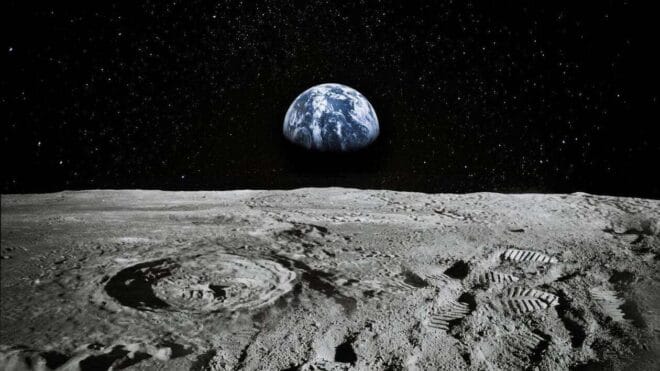
In June 2024, China's Chang'e 6 mission made history by retrieving the first samples from the Moon's far side. What secrets have these analyses revealed?
Chang’e 6 Mission Sheds Light on the Moon’s Far Side Mysteries
In 2024, a significant breakthrough in space research was achieved. The Chinese Chang’e 6 mission made history by returning the first samples from the moon’s far side, revealing mysteries of this unexplored area.
A Revolutionary Discovery
Initial analyses of these samples unveiled volcanic activities dating back 4.2 billion years. These findings, based on precise isotopic data, have refined the timeline of lunar events and significantly advanced our understanding of the Moon’s history. They also potentially impact our models of planetary formation and our comprehension of the solar system’s geological processes.
Implications of the Chang’e 6 Mission
The samples collected by Chang’e 6 came from the South Pole-Aitken basin, making them particularly unique. They originate from a region unseen from Earth. Initial results from these samples have identified two distinct volcanic events.
The oldest, dating from 4.2 billion years ago, was pinpointed using a sample of potassium-rich, rare-earth-element-laden, and phosphorus-heavy basalt. Moreover, more recent basalt samples indicate traces of volcanism from about 2.8 billion years ago.
Advancing Our Understanding of the Solar System
These discoveries not only extend the known duration of volcanic activity on the moon’s far side but also validate the astronomical “clock” established by the Apollo and Luna missions. The findings from the Chang’e 6 mission support the hypothesis that meteoritic flux on the moon’s far side is similar to that on the near side. This observation bolsters the reliability of chronological models applicable to other celestial bodies like Mars or asteroids.
Ultimately, the Chang’e 6 mission has opened new avenues for space research, providing us with a valuable glimpse into the history of our solar system and enhancing the reliability of our chronological models.