GPU Revolution at CES 2025: NVIDIA Unveils RTX 50 Series
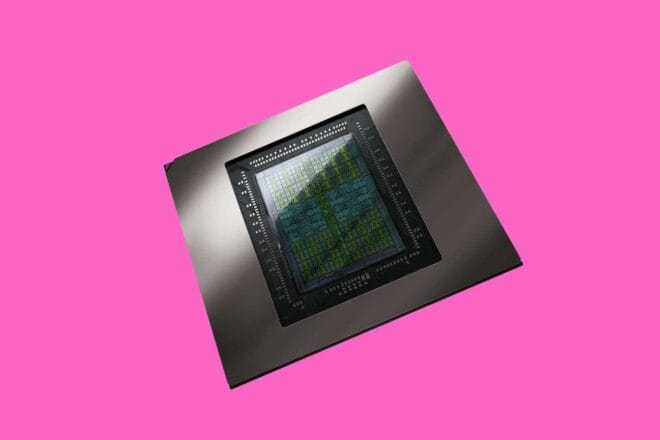
NVIDIA's Blackwell architecture drives the RTX 50 GPUs, Cosmos AI, and Thor processor, reshaping the fields of graphic performance, artificial intelligence, and autonomous robotics.
NVIDIA’s Latest Innovations: A Technological Revolution
The American multinational company NVIDIA has recently unveiled significant technological breakthroughs. The highlights include advancements in Blackwell architecture, and major strides in artificial intelligence (AI) and robotics.
The Tenfold Graphical Power of the RTX 50
Built on the Blackwell architecture, the new GeForce RTX 50 series redefines graphic performance standards. It boasts technological feats such as “triple the capabilities of Ada Lovelace architecture with 4 petaflops of AI and 380 teraflops of ray tracing”. It also features Micron’s G7 memory with an impressive bandwidth, doubling that of previous models, combining cutting-edge technology with competitive pricing at only $549.
92 billion transistors: A massive increase from the previous generation. 4 petaflops of AI and 380 teraflops of ray tracing, tripling the capabilities of Ada Lovelace architecture. 125 teraflops Shader with two distinct processing units: one for floating-point calculations and another for integers. Micron’s G7 memory with an incredible bandwidth of 1.8 terabytes per second, doubling that of the previous generation.
NVIDIA Cosmos, the AI that Understands the Physical World
Another significant reveal was NVIDIA Cosmos. This is the world’s first foundational AI platform, capable of generating synthetic data to train other AI models and create plausible physical simulation scenarios. Now available for development and research, Cosmos is an innovative platform accelerating technological progress.
Thor: The Future of Robotics with NVIDIA
The announcement of Thor, a groundbreaking processor dedicated to robotics and autonomous vehicles, also captivated audiences. Providing computational power 20 times greater than its predecessor Orin, Thor can handle vast data volumes, paving the way for a future where humanoid robots might become part of our daily lives. NVIDIA’s CEO stated that we are nearing a “ChatGPT moment” for general robotics, potentially leading to unexpected breakthroughs in the field. These advancements could transform three key industries:
Agentive AI (software robots for information tasks). Autonomous vehicles (leveraging existing road infrastructures). Humanoid robots, capable of functioning in our environment without any modifications.
NVIDIA, a Leader Redefining the Future
With these innovations, NVIDIA reaffirms its leadership in the realms of graphic technologies, AI, and robotics. The accessibility and openness of these technologies are set to accelerate both research and commercial applications, shaping a future where AI and robotics are seamlessly integrated into our daily lives.