Holograms: Still Lagging Behind Star Wars
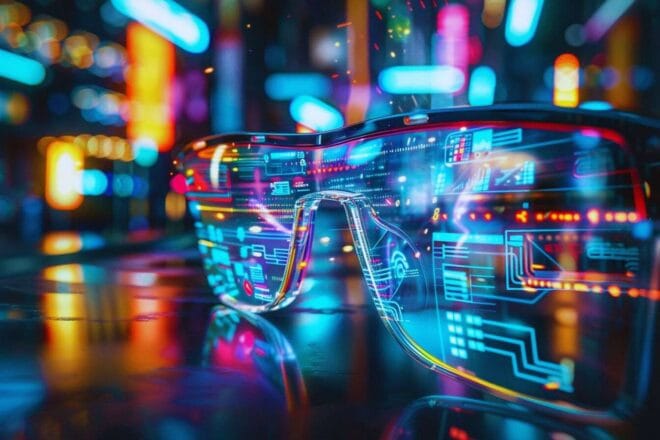
Despite promising technology and captivating prototypes, truly three-dimensional floating holograms remain elusive. However, Swave's groundbreaking technology could bring us closer to turning science fiction into reality.
Holograms: Still a Distant Sci-Fi Dream
Despite the iconic imagery of Princess Leia’s hologram in Star Wars, actual holographic technology remains elusive nearly half a century later. While augmented and virtual reality headsets like Microsoft’s HoloLens and Apple’s Vision Pro exist, they merely simulate holograms using transparent screens.
True holograms need to float freely in air, visible from every angle.
Swave: Pioneering True Holography
The field of holography is burgeoning, with companies gearing up to bring this technology to market. Among them is Swave, a Belgian startup spun off from nano-tech research hub Imec in 2022.
The company claims to have developed a groundbreaking extended reality holographic system, marking a step towards real holography. “This funding will speed up Swave’s product launches as we continue to tackle today’s augmented reality challenges with true holography,” stated CEO Mike Noonen.
The Challenge of Holographic Smart Glasses
Swave’s initial offering will be a pair of lightweight smart glasses that aim to exceed current technology standards. These glasses would use phase-change materials to direct light and create 3D images visible from all angles, avoiding eye strain.
The ultimate goal is to develop applications that can pass the “Visual Turing Test”, producing virtual realities indistinguishable from real-world visuals.
The Future of Holograms
With recent funding, Swave is poised to soon launch its products. The company is also developing heads-up vehicle displays and a spatial light modulator, which would create glasses-free holograms. This technology could potentially exceed even R2-D2’s capabilities.