How Fat Makes Classic Carbonara Exceptionally Delicious
ADN
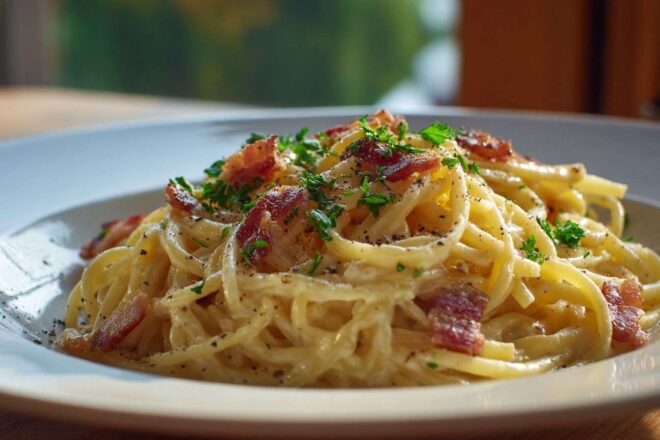
The unique richness of a classic carbonara owes much to the quality and handling of its fat, an often-overlooked element that elevates this beloved pasta dish from simple comfort food to a memorable culinary experience.
TL;DR
- Guanciale is key for authentic carbonara’s creamy texture.
- Lardons alter flavor, texture, and sauce consistency.
- Proper charcuterie choice defines a true Roman experience.
The Guanciale vs. Lardon Debate in Carbonara
Few topics in the realm of Italian cooking provoke such passionate debate as the authenticity of the famed carbonara. While arguments often swirl around the controversial inclusion—or exclusion—of cream, another, perhaps subtler, detail slips past many French enthusiasts: which type of pork should take center stage? Is it the traditional guanciale, hailing from the pig’s cheek and celebrated throughout Lazio, or the readily available lardons that dominate supermarket shelves?
The Science Behind Creaminess—Without Cream
Examining these two forms of charcuterie, stark differences quickly emerge. After three months of dry curing, guanciale offers approximately 70% richly flavored fat and only 30% muscle—a contrast to the more balanced, often smoked composition of lardons made from pork belly. This fatty profile is no accident: when heated gently, guanciale’s fat melts at just 40°C, releasing both flavor and collagen. These elements combine with pasta starch and coagulating egg proteins (at around 62–65°C) to produce carbonara’s signature creamy emulsion—all without a drop of cream.
By comparison, classic lardons lead to a number of culinary pitfalls:
- Easier sauce separation.
- An overtly oily mouthfeel.
- A tendency to overpower subtle notes of Pecorino and egg.
On top of this, the typical smoked aroma of lardons can introduce an intrusive phenolic note that further distances the dish from its Roman roots.
Mastering Charcuterie Techniques for True Carbonara
Precision is essential when preparing your pork. Experts suggest slicing guanciale into slender matchsticks before rendering it slowly in a cold pan—adding no extra fat—then finishing with a splash of starchy pasta water to preserve every drop of savory jus. If lardons are your only option, choose thick-cut, unsmoked varieties and avoid any extra oil or butter to prevent a greasy result.
The Subtle Authority of Tradition
Ultimately, while many personal adaptations abound in home kitchens across France and beyond, it is clear that choosing guanciale remains the quiet yet uncompromising hallmark of an almost genuinely Roman carbonara—a detail that makes all the difference on the plate.