Winemaking is the fascinating process that turns grapes from the vine into delicious wine. Are you familiar with how this process exactly works?
The Awakening of the Grape
The journey begins with the harvest, where the winemaker picks the grapes meticulously. This process can be manual or mechanized. Not all collected bunches meet quality standards, prompting a careful sorting to discard any damaged grapes.
From Crushing to Fermentation
The next step is destemming, separating the grapes from their stems. Following this, the crushing stage gently presses the grapes without crushing the seeds, resulting in must—a mix of juice, skins, and seeds. Modern machines enhance these processes, thus improving the wine’s quality.
Alcoholic fermentation then transforms the sugar into alcohol, imbuing the wine with its unique aroma. This critical phase occurs in large vats under strict temperature control.
The Maturation of the Wine
Post-fermentation, the maceration process begins. For 4 to 10 days, the skins soak in the fermented must, enriching the wine with tannins, flavors, and color.
The next phase is racking. The “young wine is separated from the remaining skins and seeds”. Some of these residuals are pressed to extract press wine, which can be blended back to enhance tannin levels.
Following this, malolactic fermentation occurs, converting sharper malic acid into smoother lactic acid.
The Final Touches
Then comes aging—an optional but vital stage that develops the wine’s aromatic complexity. This may be followed by blending, clarifying, and filtering to enhance the wine’s purity.
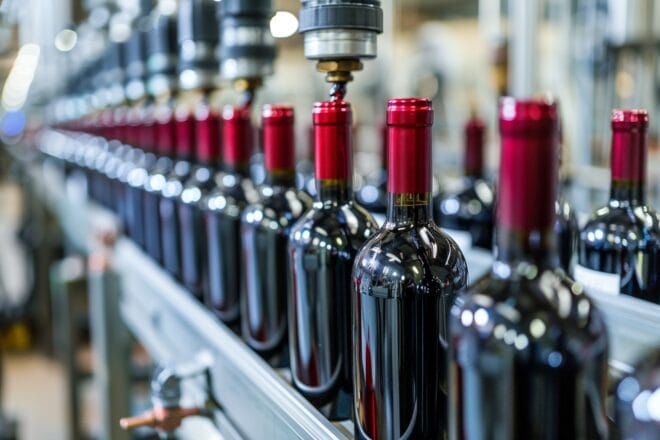
The final step is bottling, where the wine is poured into bottles and labeled. This marks the end of the grape’s journey from vine to glass.