How to Make Creamy Restaurant-Style Polenta at Home
ADN
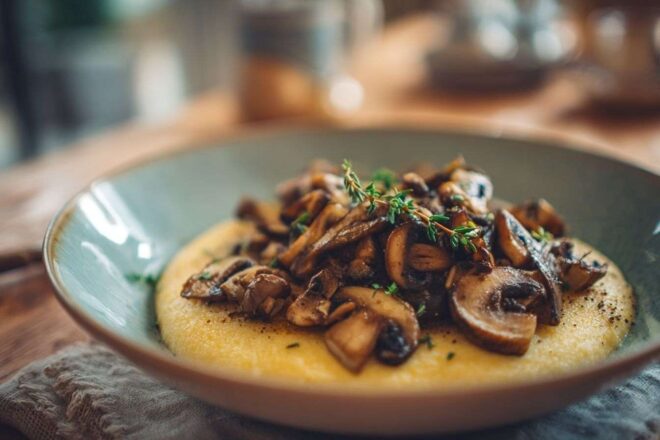
Polenta, a staple of Italian cuisine, is renowned for its creamy texture when prepared correctly. Achieving this coveted consistency at home can transform simple meals into restaurant-quality dishes, making it an essential technique for aspiring chefs.
TL;DR
- Chef shares secret for creamy, lump-free polenta.
- Remove pan from heat before adding cornmeal.
- Polenta adapts to flavors and is naturally gluten-free.
A Chef’s Secret for Authentic Italian Polenta
For many home cooks, preparing a true northern Italian polenta has long been fraught with frustration—sticky lumps or overly dense results are all too common. Yet, tucked away in the bustling Paris kitchens of Ischia and IDA, chef Denny Imbroisi, recognized from his stint on Top Chef 2012, unveils a surprisingly simple solution that promises restaurant-quality texture every time.
The Crucial Step: Off the Heat
Most people assume that technique is complicated, but the real breakthrough begins with an almost counterintuitive move. As soon as your salted water reaches a boil, take the pot off the heat entirely before pouring in fine cornmeal in a steady stream while whisking vigorously. This brief pause—often skipped—lets each grain hydrate evenly and prevents unsightly clumps from forming. Only after this step should the mixture be returned to gentle heat, where it can slowly transform into something smooth and velvety.
Classic Recipe, Modern Touches
According to Denny Imbroisi, tradition forms the backbone of great polenta: for four servings, you’ll need 250 grams of fine cornmeal, one liter of water, 30 grams of butter and 50 grams of grated Grana Padano Riserva—plus seasoning with salt and pepper. Still, there’s room for creativity. The chef recommends experimenting by combining water with milk for added creaminess or even replacing butter with a touch of gorgonzola for depth. These subtle variations often elevate polenta from mere side dish to soulful comfort food.
Serving Suggestions and Versatility
Once your mixture has simmered over low heat for about an hour—stirring regularly until it pulls away from the sides and shines—it’s time for finishing touches. Off the heat again, fold in butter and cheese; at this point, the polenta should coat a spoon luxuriously without setting hard. It’s remarkably adaptable: serve alongside braised beef, osso buco or roasted vegetables. For a twist:
- Spoon it under grilled meats.
- Sauté leftovers into golden “fries.”
After all, its natural gluten-free character makes it perfect for many diets.
Ultimately, it’s that fleeting moment off the burner which defines authentic Italian cooking: proof that sometimes small details make all the difference in the kitchen.