Immersive Commerce Set to Transform Asian Shopping Experiences by 2025
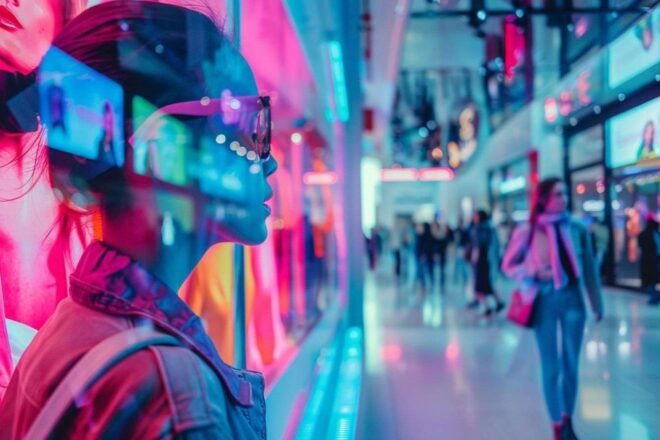
In 2025, Asia is set to transform the retail landscape as immersive commerce technologies become mainstream. Shoppers across the region will experience a new era of interactive and engaging purchasing, reshaping how products are discovered, explored, and bought.
Tl;dr
- Asia leads in immersive commerce innovation and adoption.
- AI, AR, and blockchain redefine the customer experience.
- Major challenges remain: accessibility, privacy, authenticity.
The New Face of Retail: Immersive Commerce in Asia
Across the bustling streets of Seoul, the neon-lit corners of Tokyo, and the digital avenues of Shanghai, a silent revolution is underway. Immersive commerce, once an experimental concept, has taken center stage in Asia’s major cities as we enter 2025. Here, a generation seamlessly plugged into their smartphones blurs the boundary between reality and virtuality—often with surprising ease. What was once considered science fiction is now everyday retail.
Cutting-edge Technologies Shaping Experiences
But how did this leap occur? The rapid evolution can be traced to a potent mix of innovation and user readiness. Local platforms like Zepeto or Xiaohongshu have pioneered hybrid models that merge e-commerce with interactive universes, offering users unique journeys. On top of that, Asian consumers already embrace avatars and live shopping, thanks to their advanced digital literacy.
The scope of immersive commerce now spans far beyond digital storefronts. It envelops fully interactive 3D environments, stylized or personalized avatars, and even cutting-edge experiences powered by augmented reality (AR) or virtual reality (VR). Underpinning these innovations are technologies such as artificial intelligence, the Web3 ecosystem, and the increasingly crucial blockchain—all contributing to customer experiences that are both emotionally engaging and highly individualized.
« On passe d’un site transactionnel à un univers expérientiel », summarizes Olivia Lee, founder of Livium—a sentiment echoed by many industry pioneers.
Tangible Innovations and Use Cases
If you look for concrete applications, Asia’s market provides plenty. One notable example: branded t-shirts embedded with NFC chips alongside AR features and Digital Product Passports (DPP). These combine to authenticate products while narrating their backstory. Meanwhile, virtual fitting rooms—powered by AI avatars that require nothing more than a user’s photo—offer instant visualization of customized outfits. Virtual events in worlds like Decentraland, as well as on bespoke 3D microsites, are transforming how brands connect with consumers. Even design competitions increasingly allow creators to showcase ideas digitally before any physical production occurs—a key step toward waste reduction.
To break it down further, several factors underpin this dynamic momentum:
Navigating Challenges Ahead
Still, there is no shortage of questions on the horizon. Accessibility remains a core issue: some solutions prove daunting for less tech-savvy users, making a mobile-first approach almost non-negotiable. The realism—and interoperability—of consumer avatars across multiple platforms also raises new debates.
Meanwhile, ensuring product authenticity becomes critical in combatting counterfeiting; here again, the role of the Digital Product Passport is emerging as pivotal. But perhaps most pressing are the ethical concerns: from vast biometric data collection within these immersive spaces to rigorous privacy protections—not to mention environmental promises tied to virtual try-ons or on-demand production. Whether immersive commerce ultimately supplants traditional e-commerce remains uncertain for some skeptics. Yet in today’s Asian markets, telling stories digitally is no longer just an accessory—it has become an essential part of contemporary retail’s playbook.