Korean Thriller 2025: Dark Comedy Exposes Future Society’s Flaws
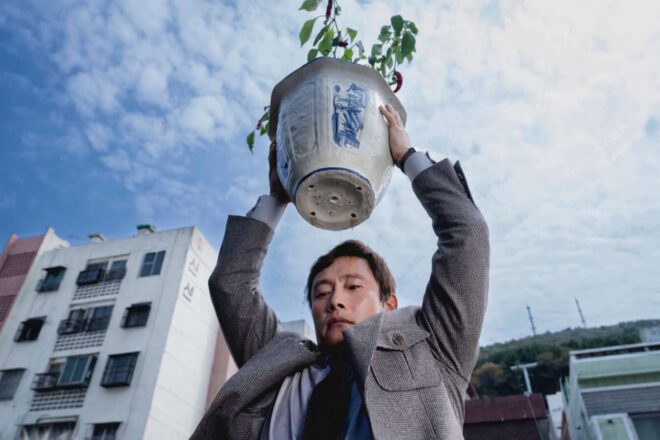
CJ Entertainment / PR-ADN
A sharp and darkly comic South Korean thriller boldly lays bare the most troubling flaws and absurdities projected for 2025, blending biting satire with suspense to offer an unflinching look at the near future’s social and moral challenges.
TL;DR
- Dark satire targets modern South Korean capitalism.
- Grotesque humor exposes social descent and moral compromise.
- Striking visuals deepen the film’s tragicomic tone.
A Dark Mirror on South Korean Society
Park Chan-wook, a filmmaker long celebrated for his daring narratives, returns with his latest work, No Other Choice. Far from a conventional thriller, the film plunges into the heart of contemporary South Korean anxieties—delivering an unflinching satire on the pitfalls of modern capitalism. At its center stands Man-su (portrayed by Lee Byung-hun), a high-ranking executive whose carefully constructed world disintegrates after mass layoffs sweep through his company. The loss is not just material; what unravels is an all-consuming fear of social descent.
Tragicomedy and the Absurdity of Survival
Eschewing any semblance of a classic social drama, Park’s narrative lurches into the realm of the absurd. The humor here is unmistakably dark: each attempt by Man-su to salvage his reputation spirals into farcical chaos or chilling violence. Think less gritty realism, more feverish nightmare, as failed schemes and cartoonishly disastrous plots play out against a backdrop of mounting despair. Standout sequences—such as an alcohol-fueled dental extraction—underscore this uneasy blend of slapstick and cruelty.
Yet viewers may struggle to sympathize with Man-su. His obsession isn’t simply survival but maintaining a flawless public image at any cost. In Park’s pointed vision, it’s not hunger or homelessness that drives his antihero—it’s the terror of losing face in an unforgiving society.
The Power of Visual Symbolism
What distinguishes No Other Choice, however, is its sophisticated visual language—a trademark of Park Chan-wook’s direction. Reflections abound: tablets, mirrors, and screens become tools for revealing hidden motives or internal conflict. The camera shifts perspectives with fluid transitions—a father’s pistol glimpsed in a son’s anxious eyes, or unspoken truths flickering on a laptop during a tense investigation.
Several factors explain this distinct visual approach:
- The omnipresence of reflective surfaces heightens moral ambiguity.
- Rapid cuts disorient viewers between competing perceptions.
- Mundane objects (mirrors, boxes, screens) are imbued with symbolic weight.
Moral Ambiguity and Bitter Irony
Beneath the comic brutality lies biting commentary on collective ethics. In one especially striking metaphor, fruit trees are quite literally nourished by victims—suggesting that in this society, humanity is sacrificed to sustain privilege. Even Man-su’s wife (Son Ye-jin) adopts quiet complicity as compromise becomes routine.
Ultimately, Park crafts a satirical fable that refuses easy answers. If anything, No Other Choice asks whether social stability is worth abandoning all decency—a provocation that lingers well beyond its limited release.