Mathematician Who Revolutionized GPS Technology Dies at 95
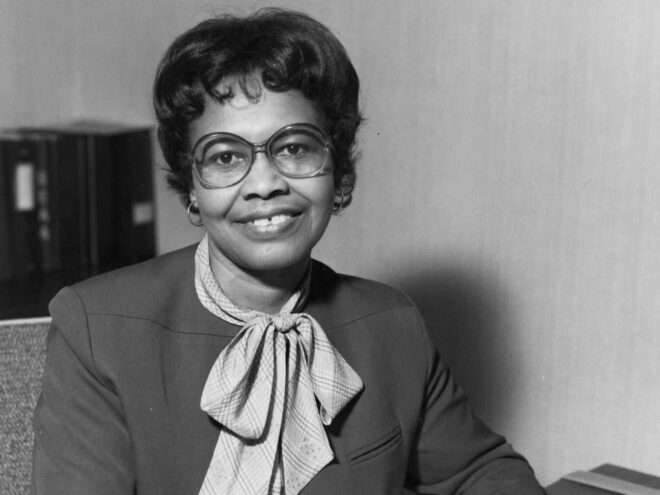
IEEE Spectrum / PR-ADN
The mathematician whose groundbreaking work made GPS technology possible has died at the age of 95. Her contributions revolutionized navigation systems, impacting millions worldwide and leaving a lasting legacy in science and everyday life.
TL;DR
- Gladys West shaped modern GPS with groundbreaking math.
- Her achievements faced delayed recognition due to discrimination.
- West’s legacy quietly transformed daily life worldwide.
A Quiet Pioneer of a Universal Technology
If most people reach for their phones to check directions without a second thought, it is largely thanks to the mathematical vision of Gladys West. While her name rarely surfaces in discussions of technological innovation, her calculations are embedded in the fabric of everyday navigation. GPS, the now-essential system guiding billions across the globe, would not exist in its present form without her painstaking work—though only recently has she begun to receive public acknowledgment for her contributions.
Overcoming Barriers: From Segregated Virginia to Scientific Excellence
Born in 1930 in rural Virginia, Gladys West grew up under the shadow of the Jim Crow laws. Yet, she consistently broke through boundaries that historically limited both women and African Americans in science. She pursued mathematics at what was then Virginia State College, securing both a bachelor’s and master’s degree. Her remarkable academic path led her, in 1956, to join what would become the Naval Surface Warfare Center at Dahlgren—a significant leap at a time when institutional barriers were still firmly entrenched.
The Mathematical Backbone of GPS
Throughout the 1970s and 1980s, Dr. West tackled an extraordinary challenge: precisely modeling Earth’s shape using satellite data—a task often described as “mathematical gymnastics.” This work became the bedrock upon which modern GPS technology rests. For over four decades, she refined these models at Dahlgren before retiring in 1998. Her persistence is even more impressive when one considers the realities she faced every day:
- Sustained segregation and prejudice in the American South,
- The marginalization of Black and female scientists’ achievements,
- An uphill battle for formal recognition within scientific circles.
A Legacy Belatedly Honored
Recognition for Dr. West’s pivotal role arrived late—well after her retirement. It was only in 2018, following renewed interest sparked by members of the Alpha Kappa Alpha sorority who uncovered her story, that she received national honors: induction into the prestigious Pioneers Hall of Fame by the US Air Force Space and Missiles and accolades from historically Black universities. With characteristic humility, Dr. West revealed in a 2020 interview with The Guardian that she still preferred paper maps to GPS—a quiet reminder that sometimes world-changing figures remain grounded by choice as well as circumstance.