Mecha Comet: Modular Mobile Linux Computer with Clip-On Extensions
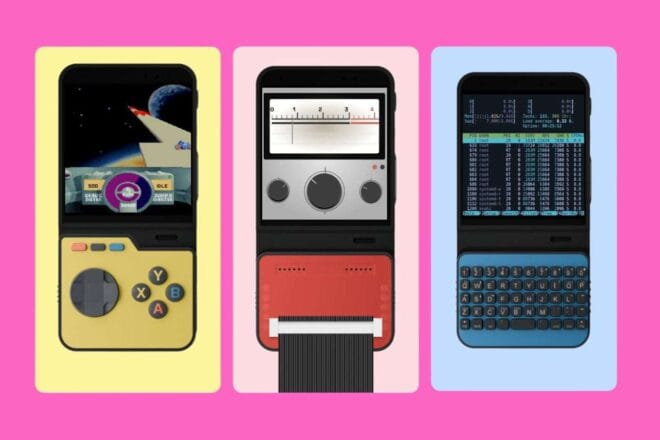
At CES 2025, Mecha Comet unveiled a groundbreaking modular handheld computer running on Linux, featuring clip-on extensions for a customizable user experience.
The Comet: More Than a Phone, a Modular Pocket Computer
Imagine a device that goes beyond the basic functions of a phone—a customizable, modular pocket computer. This is what Mecha Systems offers with its latest product, the Comet.
Impressive Technical Specifications
Despite its compact, sturdy appearance that fits in your palm, the Comet is powerful. Under the hood, it boasts a 1.8 GHz ARM64 Quad-core processor, 4 GB of memory, and 32 GB of onboard storage, which is extensively expandable. Indeed, the features of the Comet are highly customizable.
Extensions to Transform Your Comet
Thanks to its magnetic interface, users can attach various control panels, called extensions, thus transforming the Comet according to their needs. Currently, Mecha offers three standard extensions: a gamepad, a GPIO panel with access to 40 pins, and a keyboard with ABS keys.
An Open-Source Operating System
The Comet operates on Mechanix OS, a Debian-based Linux distribution, and its graphical user interface is powered by Mecha’s open-source Mechanix shell. The Comet features a 3.4-inch IPS LED display with capacitive touch technology. It also includes a 5MP camera with autofocus, a microphone, a speaker, two USB-A ports, an Ethernet port, as well as Bluetooth 5.0 and 2.4 GHz slash 5 GHz 802.11ac wireless capabilities.
The Comet is designed to let users tinker with every part, especially its internal components. The back of the Comet opens up easily, encouraging exploration and customization. All its parts and extensions are available as 3D printable files.
The Comet was created with the vision of providing a versatile computing platform for real-world applications. It targets a broad audience, including students, artists, engineers, and tech enthusiasts from all walks of life. Get ready to see the Comet launch on Kickstarter very soon. The most unexpected innovations are likely to come from the users themselves. The future is not just in your hands, but in the palm of your hand.