Meta Leads the Charge for Open and Sovereign AI Development in France
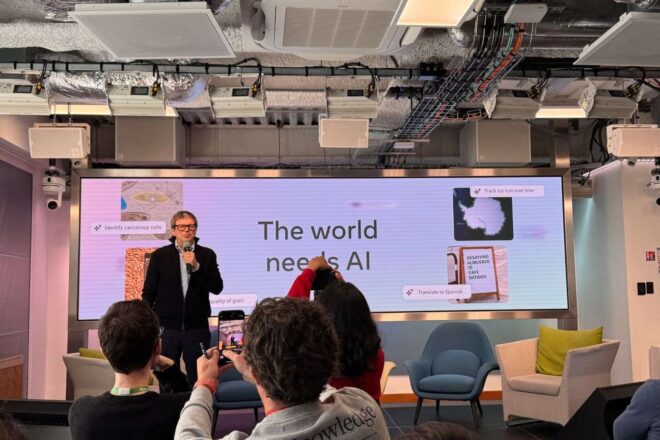
Meta is positioning itself at the forefront of artificial intelligence in France, supporting open and sovereign technologies. The company’s strategic initiatives aim to strengthen local innovation and ensure greater independence for the French AI ecosystem.
Tl;dr
- FAIR lab drives Paris AI innovation and global ecosystem.
- Open-source and diversity are key for digital sovereignty.
- French AI growth faces funding and talent retention challenges.
The Quiet Powerhouse: FAIR’s Impact on Paris and Global AI
Few research centers have shaped the contemporary landscape of artificial intelligence like the FAIR laboratory at Meta. Since its foundation in Paris back in 2015, this institution has served as a magnet for talent, hosting more than 120 researchers over the years. Remarkably, a majority—62%—of PhD graduates have continued to contribute to the broader AI ecosystem. Most, in fact, have chosen to remain in Paris, with 93% staying local. Notably, some alumni have gone on to co-found new industry trailblazers such as Mistral AI or Kyutai, further cementing France’s place on the global map.
A Push for Openness: The Transformative Role of Collaborative Research
The last decade has witnessed a profound shift brought about by the momentum of open research. It’s tempting to declare that we stand on the cusp of machines equaling human intelligence. Yet, scientific reality encourages caution: even today’s most advanced algorithms struggle with tasks that humans—sometimes even children—find mundane. Activities like driving after minimal training or clearing a table still remain out of reach for most robots. In trying to understand why, several factors come into play:
- Machine learning remains restricted compared to human memory capabilities.
- Open models such as Llama have spread innovation but true autonomy is elusive.
- Collaborative work—particularly involving students embedded within both academic and industrial labs—continues to spark new ideas.
Diversity and Sovereignty: The Case for Local Adaptation
As our digital lives become ever more entwined with intelligent assistants, questions of representation grow sharper. Each culture, language, and value system demands tailored solutions—a point underscored during a recent presentation by Yann LeCun: « Aucune entreprise américaine ou chinoise ne pourra couvrir seule toute la diversité linguistique et culturelle mondiale ». Thus, open-source platforms emerge as essential for protecting our collective digital sovereignty, allowing models to be adapted without dependence on foreign tech giants. This need becomes even more pronounced as some major players tighten control over their technologies, while others maintain an ongoing commitment to openness and scientific progress.
The French Paradox: Rapid Ascent Amid Ongoing Challenges
On the world stage, France has carved out an enviable reputation in artificial intelligence thanks largely to its vibrant pool of young researchers and a deep-rooted scientific tradition. Although Paris now stands alongside San Francisco and New York in terms of investment leadership, persistent obstacles remain. European public and private funding lags far behind that found in the United States or China.
Attracting and retaining top global talent hinges not just on offering competitive compensation but also on streamlining cumbersome administrative processes—a point often made when discussing innovation clusters around « C’est autour des grandes universités que s’articulent les pôles d’innovation internationaux ».
Looking ahead, there’s cautious optimism that a globally distributed approach—wherein training centers cater to different linguistic or cultural groups yet collaborate closely—could bolster both technical robustness and democratic resilience in AI. Success here will depend heavily on whether regulators choose to nurture this open environment or impose barriers that stifle collective progress.