NASA Shuts Down Features on Voyager 1 and 2 to Extend Their Lifespan
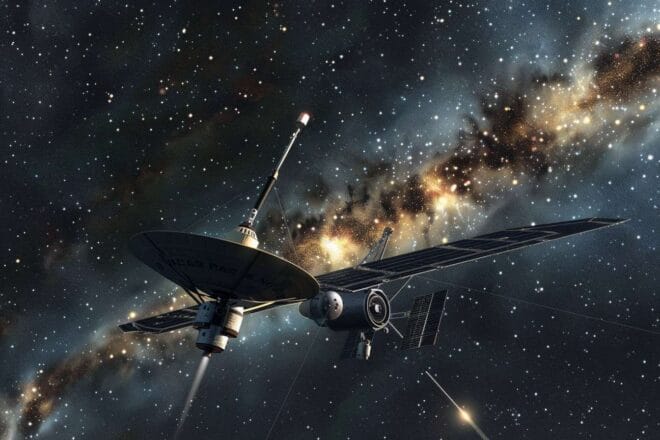
To extend their operational life, NASA has decided to deactivate some components of the Voyager 1 and 2 spacecraft, which continue to journey through space as venerable explorers.
Voyager Probes Endure the Ravages of Time
Nearly half a century since their launch, NASA’s twin Voyager 1 and 2 spacecraft continue their journey into interstellar space.
However, with diminishing power supplies, these space veterans are gradually losing some of their capabilities. NASA has taken steps to extend their operational life.
Sacrificing Features to Extend the Mission
On February 25, NASA’s Jet Propulsion Laboratory (JPL) deactivated Voyager 1’s cosmic ray subsystem experiment. On March 25, it will do the same with Voyager 2’s low-energy charged particle instrument.
“The Voyagers have been deep space icons since their launch, and we want to keep them that way as long as possible,” stated Suzanne Dodd, Voyager project manager at JPL.
However, power is running low. Without shutting down one instrument on each Voyager now, they could run out of power within months.
Overcoming Technical Challenges
Each probe will continue to operate three scientific instruments, although seven others have been turned off over time. Last October, NASA shut down Voyager 2’s plasma science instrument.
Despite these deactivations, both probes have experienced technical issues. Voyager 1 resumed normal operations last June after seven months of glitches, including unreadable data.
Hope for the Future
“Every minute of every day, the Voyagers explore a region where no spacecraft has gone before,” said Linda Spilker, Voyager project scientist at JPL. She noted that each day might be their last, but could also bring another interstellar discovery.
NASA hopes that the Voyager 1 and 2 probes will continue their pioneering mission as long as possible, perhaps until their 50th anniversary in 2027.