Oxford Scientists Turn Everyday Objects into Solar Panels with New Light-Absorbing Material
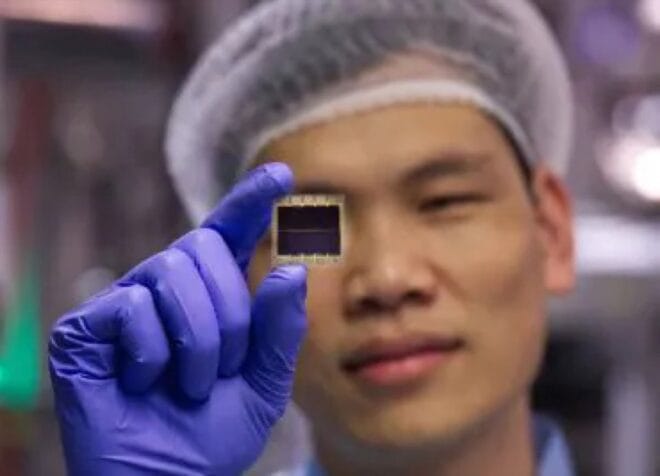
One day, this ultra-thin material could be applied to roofs, cars, and even cell phones.
A New Solar Era:
In response to unprecedented environmental challenges, researchers at Oxford University may have discovered an innovative solution to broaden access to solar energy.
Towards a Next-Generation Solar Panel:
These scientists have developed a ultra-thin perovskite material layer that could replace bulky traditional silicon-based solar panels. This flexible film, which is 150 times thinner than a typical slice of silicon, can be applied to virtually any sun-exposed surface. “This approach could enable photovoltaic devices to achieve efficiencies exceeding 45%,” suggests Dr. Shaufeng Hu, a postdoctoral researcher in Oxford’s physics department.
Solar: More Accessible, More Efficient:
Beyond practicality, this new method could also cut the cost of solar energy. With reduced construction and installation needs, and increased usage flexibility, the benefits are numerous. However, challenges remain, particularly concerning the long-term stability of these new perovskite panels. A 2016 study published in the journal Solar Energy Materials and Solar Cells notes that while perovskite is “effective” and “inexpensive,” it remains “unstable” due to its sensitivity to moisture.
The Future of Energy Looks Solar:
Despite these challenges, solar energy has become increasingly cost-effective over the past decade. According to the Global Change Data Lab, the cost of photovoltaic technology has dropped by 90% over the last ten years. Thus, the path to a world powered by sustainable energy is widening each day. From a solar farm project on a former US nuclear weapons base to a massive solar pipeline supported by Google in Taiwan, the focus is clearly on innovation in solar energy. And as a great thinker once said, “Never underestimate the power of the sun.”