Planet X: Is There Another Hidden Planet in Our Solar System?
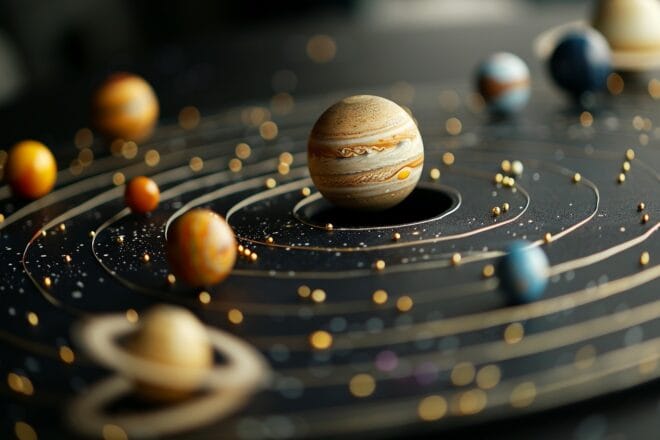
The motion of certain objects in the solar system shows inconsistencies with established theory, suggesting a possible ninth planet. Isn't that intriguing?
In Search of the Ninth Planet
Picture the solar system as a grand cosmic dance. Millions of objects – including planets, moons, comets, and asteroids – move in a gravity-choreographed ballet. However, this harmony hints at an unseen dance partner: a ninth planet.
Gravity: The Key to the Mystery
Every celestial body in the solar system, no matter its size, exerts gravitational pull. The more massive the object, the stronger its pull. This gravitational force keeps everything from us on Earth’s surface to planets orbiting the Sun in place. The Sun, with its significant mass, dominates with the strongest pull of all.
Upon observing the movements of distant solar system objects, astronomers noted anomalies. The orbits of certain dwarf planets beyond Pluto are “unexpected”. These movements suggest the presence of a mysterious “Planet X”.
Planet X: An Invisible Presence
Computer models of gravitational forces indicate that Planet X could be at least ten times Earth’s mass. This significant mass is believed to cause the unusual movements of distant objects. The big question remains: “Where is this planet?”
Validating these models poses a significant challenge. The only way to do so is by locating Planet X, which is easier said than done. Due to its distance from the Sun, this planet would be dim and challenging to detect, even with the best telescopes.
The Quest Continues
Despite challenges, researchers worldwide persist in the search for visible evidence of Planet X. New telescopes will be constructed, and fresh sky surveys will launch over the next decade. These advancements might finally allow us to confirm or refute the existence of this elusive ninth planet.