Tesla to Launch Humanoid Robots Next Year, Says Elon Musk
Tesla / PR-ADN
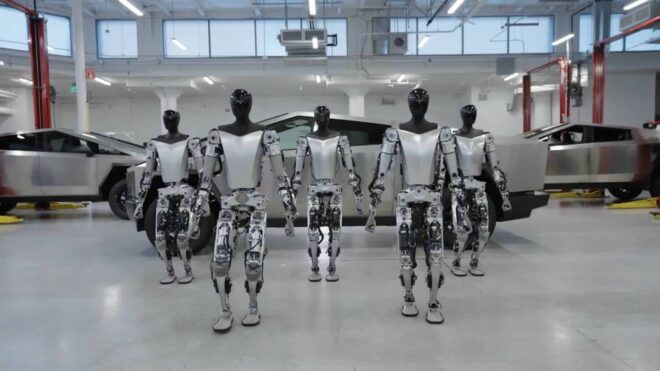
Elon Musk has announced that Tesla plans to bring humanoid robots to market as early as next year, signaling the company’s accelerating ambitions in robotics and artificial intelligence and raising questions about the technology’s potential impact on society.
TL;DR
- Musk claims Optimus robot release by late next year.
- Experts question feasibility and technology readiness.
- Tesla’s bold promises boost shares but skepticism remains.
Bold Predictions at Davos Shake Markets
During the recent World Economic Forum in Davos, a characteristically audacious declaration from Elon Musk took center stage. The CEO of Tesla announced that the much-hyped humanoid robot, known as Optimus, could be available to consumers as soon as the end of next year. Almost immediately, Tesla’s stock responded with a leap of over 3%. Yet beneath the market enthusiasm, doubts are swirling: can such an ambitious timeline withstand scrutiny?
Skepticism Over Technological Readiness
Behind the headlines, industry analysts and robotics experts are raising eyebrows. There is a familiar pattern to Musk’s public statements—a tendency toward bold scheduling that often overlooks practical and industrial constraints. This latest announcement joins a list of spectacular promises that sometimes blur the line between vision and feasibility. Musk insists that only when these robots achieve “very high reliability, safety, and a wide range of functions” will they hit the market, but the timeline remains remarkably aggressive.
Several factors explain this skepticism:
- The technological maturity needed for complex autonomous robots is still years away.
- Recent demonstrations reportedly relied on human remote control rather than genuine autonomy.
- The sudden departure of program lead Milan Kovac casts further uncertainty on progress.
Demonstrations Draw Criticism
Supporters point out that early versions of Optimus are already performing basic tasks within a Tesla factory. However, little concrete evidence has surfaced beyond Musk’s assertions. Reports have circulated describing staged demonstrations where the supposed autonomous robots were discreetly operated by humans behind the scenes—hardly a testament to breakthrough innovation. This lack of transparency continues to fuel questions about whether Optimus is anywhere near commercial reality.
Tesla’s Broader Industrial Gambles
Not content with just one futuristic pledge, Musk also hinted at production targets for the long-awaited Cybercab. According to his statement, manufacturing could begin as early as April with hopes for two million units annually—a figure that has raised both anticipation and incredulity among industry watchers. This unconventional vehicle, limited to two seats and designed without a steering wheel, faces its own uncertainties in terms of mainstream appeal.
So while Wall Street may applaud Tesla’s latest leaps into uncharted territory, many observers remain cautious—tempering optimism with hard questions about what is truly possible in the near future.