Upcoming Blood Moon: Key Events and Surprises to Expect
ADN
As the highly anticipated blood moon draws near, skywatchers are eager to witness its rare celestial spectacle. This lunar event promises unique visual phenomena and has sparked curiosity about the unexpected sights that may unfold during the night.
TL;DR
- No lunar eclipse visible from France on March 3, 2026.
- Still, striking night sky phenomena expected that evening.
- Several bright stars and planets will accompany the full Moon.
A Missed Lunar Eclipse for France in 2026
On March 3, 2026, many in France will find themselves disappointed as a much-anticipated lunar eclipse passes by entirely unnoticed. For once, the timing of this celestial event simply doesn’t play in favor of French sky-watchers. While excitement typically builds around such rare spectacles, astronomers have confirmed that not a glimpse of this particular eclipse will be visible from metropolitan France.
The Unfavorable Timing: Why France Will Miss Out
The full Moon will technically occur at precisely 12:37 p.m. local time—a detail that proves crucial. By then, the Moon will have already dipped below the horizon for all of mainland France. In fact, the eclipse itself begins at 9:45 a.m., well after the Moon sets across the country (generally around 8 a.m., varying by region). The phenomenon’s most dramatic moment—the so-called “blood Moon”—is slated for 12:33 p.m., exactly when daylight dominates. This means French observers won’t even catch its faintest shadow.
No Eclipse, But No Shortage of Nighttime Wonders
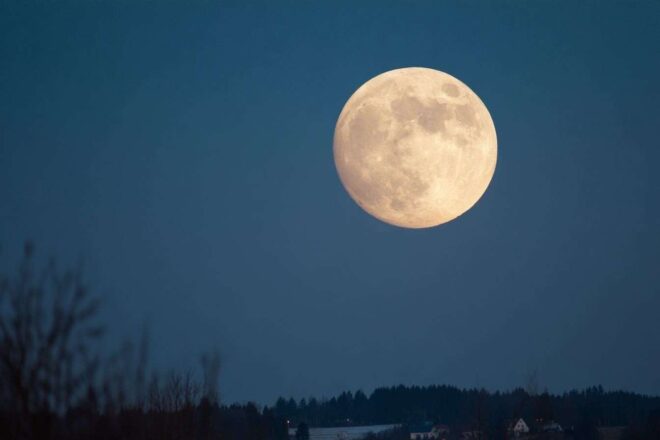
Yet all is not lost for enthusiasts with their eyes set on the heavens. Once night falls on March 3rd, the Moon will return—rising low above the horizon from about 8 p.m. onward (slightly earlier in Brest than in Strasbourg). This particular positioning gives rise to two visually compelling effects:
- An intense orange hue, thanks to moonlight passing through a thicker slice of atmosphere and losing its blue tones.
- An optical illusion making the low-rising Moon appear unusually large when viewed against nearby buildings or trees.
A Celestial Lineup Worth Watching
Adding further incentive to venture out, several prominent companions will grace the night sky. The giant planet Jupiter will be unmistakable in the southeast. Meanwhile, Sirius, famed as the brightest binary star system visible from Earth, will dazzle toward the south-southeast. Not to be outshone, both Bételgeuse, a massive red supergiant, and Capella, actually a quadruple star system disguised as a single point of light, promise additional intrigue.
So while this year’s lunar eclipse slips by unseen over France, those willing to wrap up and look up can still enjoy an evening marked by striking astronomical phenomena—proving yet again that sometimes nature offers consolation prizes worth staying up for.