How to Make Beef Bourguignon Tender: Grandma’s Best Tips
ADN
Many home cooks struggle with tough beef in their bourguignon, missing out on the melt-in-your-mouth texture that defines this classic dish. A cherished grandmother's tip reveals the simple trick for achieving perfectly tender meat every time.
TL;DR
- Time and patience are crucial for authentic beef bourguignon.
- Quality ingredients and cast iron pot elevate the dish.
- Attention to detail in every step makes all the difference.
The Timeless Secrets Behind Exceptional Beef Bourguignon
When it comes to crafting an outstanding beef bourguignon, memories of our grandmothers’ kitchens often resurface, prompting an enduring question: why does their version possess that elusive, mouthwatering quality that so many modern attempts seem to lack? Even when following revered cookbooks or expert culinary websites, something essential is frequently missing.
Preparation: The Power of Patience
What truly set those classic cooks apart wasn’t cutting-edge appliances or sophisticated techniques. Instead, it was a deep respect for timing and organization—a methodical pace that today’s hurried routines rarely accommodate. The process begins long before the actual cooking day. On the eve of preparation, generous cubes of beef are immersed in a marinade of robust Burgundy Pinot Noir, onions, carrots, and bouquet garni. This overnight bath transforms the meat’s character, priming it for flavors to infuse thoroughly.
Only after this careful marination does the real work start: draining the meat, quickly browning it, then letting it simmer gently in a heavy cast iron pot. According to old wisdom—“the longer, the better”—three hours over low heat is considered just the starting point. Some home chefs even let the dish rest a full day before reheating it for serving. The reward? Meat that falls apart at the touch of a fork and a sauce rich with layered flavors.
Choosing Ingredients: A Foundation for Success
There’s broad agreement among seasoned cooks that a dish is only as good as its ingredients. Careful selection plays a vital role: cuts like paleron, shin, or cheek are prized for how they yield under slow cooking, turning humble pieces into culinary gems. As for wine, while extravagance isn’t necessary, using a decent bottle enhances depth without overshadowing other flavors.
A well-chosen cast iron cocotte ensures steady heat distribution—no rival container achieves quite the same effect.
The Fine Art of Finishing Touches
Several factors explain why some versions simply taste better:
- Browning lardons, onions, and carrots separately before searing the beef;
- Dusting with flour and allowing it to color for a rich base;
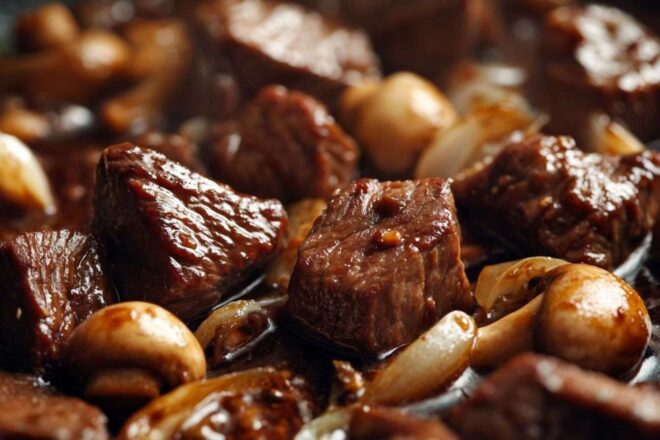
- Adding sautéed mushrooms and caramelized pearl onions only at the end.
Finally, presentation matters. Whether paired with homemade mashed potatoes, steamed new potatoes, or rustic garlic-rubbed bread, these accompaniments remind us: perhaps the true secret behind an exceptional boeuf bourguignon isn’t hidden in complex recipes—it lies in patient attention to every stage and in letting time work its quiet magic.