Pluribus: Vince Gilligan’s Emotional Apocalypse After Heisenberg Explained
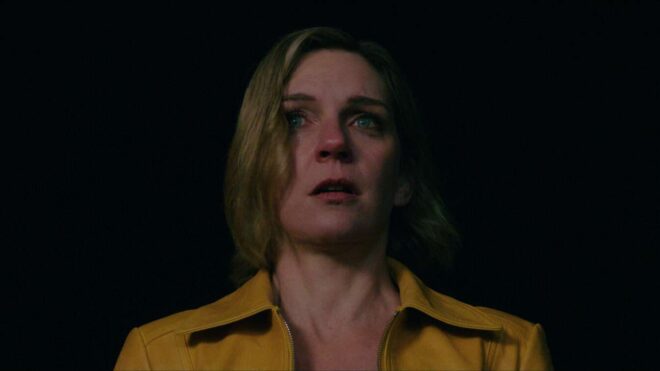
Sony Pictures Television / PR-ADN
Following Heisenberg’s dramatic saga, Vince Gilligan turns his creative lens to a new narrative with Pluribus, exploring the depths of emotional upheaval and turmoil in a world shaped by his signature storytelling style.
TL;DR
- Pluribus introduces unprecedented global emotional consequences.
- Carol Sturka’s negativity triggers a disaster with millions dead.
- The series radically redefines moral responsibility in fiction.
A New Scale of Catastrophe in Television Drama
When discussing the legacy of Vince Gilligan, the mind usually returns to the chilling arcs of Walter White or Saul Goodman, whose moral ambiguities redefined television. Yet with the arrival of Pluribus, Gilligan’s universe expands into uncharted territory—one where individual emotions can wreak havoc on a truly global scale. Through a unique “mental hive” mechanism, the series explores how a single outburst can resonate catastrophically throughout society, with consequences that dwarf even the darkest moments of Breaking Bad.
Carol Sturka: A Reluctant Antiheroine for a New Era
At the heart of this seismic shift is Carol Sturka, played with nerve and nuance by Rhea Seehorn. Unlike traditional villains, Carol is not inherently violent. Her flaws—deep-seated negativity and frequent brooding—are all too human. Before an alien virus reshapes society into a collective consciousness, her lapses rarely extend beyond harsh words or overindulgence. But in a world connected by the “We,” every emotion is magnified—and Carol’s casual invective suddenly becomes capable of mass destruction.
Murderous Words, Global Repercussions
The true horror unfolds during one explosive episode: Carol’s angry tirade ripples through the psychic network, leaving millions convulsed in shock. The final toll? Over 11 million deaths globally. Though she tries desperately to reverse the damage, her efforts are futile—and the cycle tragically repeats as she struggles with guilt and despair across subsequent episodes.
Several factors explain this transformation from personal failing to worldwide tragedy:
- Mental hive technology amplifies every individual emotion.
- Collective consciousness erases private space for regret or restraint.
- Unintended consequences now vastly outpace deliberate wrongdoing.
Remarkably, this scale of accidental harm makes Heisenberg’s criminal exploits seem almost trivial by comparison.
Redefining Moral Boundaries on Screen
Yet the devastation does not end there. The very emergence of this collective mind causes an initial upheaval resulting in nearly 886 million deaths—a number almost beyond comprehension for television fiction. As Pluribus pushes these boundaries, it provides Seehorn with a role sharply distinct from her morally gray turn in Better Call Saul: here, every slip risks incalculable loss.
Amid these sweeping changes, viewers are left pondering an unsettling question: In a world where even one word can become apocalyptic, how does anyone bear responsibility? Pluribus forces us to confront whether our inner turmoil might someday become everyone’s burden—a chilling prospect at the heart of Gilligan’s latest creation.