The Lord of the Rings: Invisibility and the Corrupting Power
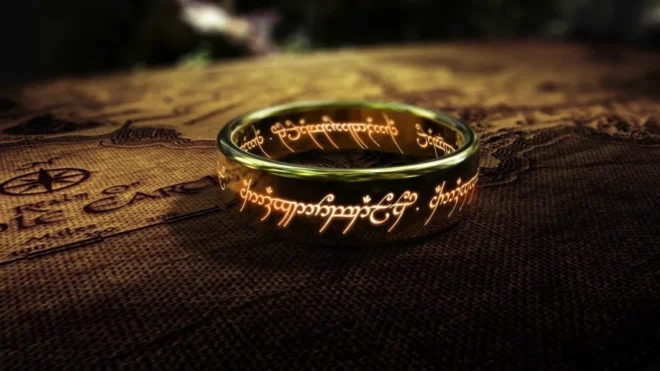
New Line Cinema / PR-ADN
In The Lord of the Rings, the concept of invisibility is intricately linked to the corrupting influence of power, illustrating how those who seek dominance risk losing themselves entirely to its consuming force.
TL;DR
- The Ring’s invisibility depends on the bearer’s nature.
- Mortals enter the “wraith-world,” facing hidden dangers.
- Sauron’s essence renders invisibility unnecessary for him.
A Complex Power Beyond Simple Invisibility
Ever since the release of The Lord of the Rings, fans have debated a perplexing question: why does the One Ring make hobbits vanish from sight, yet not its own master, Sauron? This paradox has fueled discussions for years, and the answer lies not in straightforward magic but in the intricate metaphysics crafted by J.R.R. Tolkien. The Ring’s power is anything but a simple cloak of invisibility—its effects hinge on both the wearer’s nature and the shadowy worlds within Tolkien’s lore.
The Perilous Threshold of the Wraith-World
When characters like Frodo or Bilbo put on the One Ring, they do more than simply disappear. Gandalf warns Frodo, memorably, that “you were in grave danger when you wore the Ring, for then you were half in the wraith-world yourself.” Indeed, mortals who don the Ring are thrust partly into this perilous realm—the haunt of Nazgûl—where visibility to others comes at the cost of exposure to ancient evils. The power is double-edged: while wearers elude ordinary eyes, they simultaneously become vulnerable to forces far more insidious.
Sauron: Mastery Over Worlds Seen and Unseen
Here lies a crucial distinction. For mortals—including hobbits—the Ring severs their link with reality, revealing their weakness and making them susceptible to corrupting influences. In contrast, Sauron is a Maia, an immortal primordial spirit whose existence straddles both visible and invisible planes. Because his essence already permeates these realms, the act of becoming invisible is irrelevant to him; he fully controls what others cannot even perceive. His domination springs not from physical presence but from an omnipresent will that transcends boundaries.
The True Cost of Power: Exposure and Corruption
It may be tempting to view invisibility as an advantage. However, for ring-bearers like Frodo, each use increases their visibility within the wraith-world and heightens vulnerability to its inhabitants’ destructive influence. Several factors explain this harrowing price:
- Mortal wearers lose touch with reality.
- They attract attention from entities like the Nazgûl.
- Repeated use leads to mounting psychological peril.
Ultimately, Tolkien’s vision reflects a profound commentary on power itself: what grants might to some dooms others. For mortals teetering at reality’s edge, invisibility spells danger rather than safety—while for Sauron, mastery over worlds makes such tricks obsolete. The Ring’s enigmatic powers are no mere plot device but a window onto moral risks that lie beyond human comprehension.