Unmade American Remake of Battle Royale: The Untold Story
Toei Company / PR-ADN
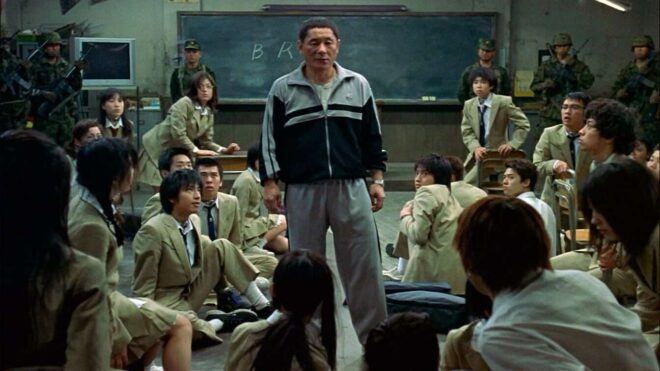
Although often rumored and frequently discussed among fans and filmmakers, an American remake of the cult Japanese film Battle Royale was never actually produced. The project circulated in Hollywood, but ultimately failed to materialize on screen.
TL;DR
- Battle Royale shaped pop culture and the “death game” genre.
- Hollywood’s remake stalled due to shootings, The Hunger Games.
- The original’s raw message remains unmatched and essential.
An Enduring Cultural Phenomenon
Since its debut in 1999, Battle Royale—the harrowing novel by Koushun Takami and its equally striking film adaptation—has left a lasting imprint on global popular culture. The premise is as radical as it is provocative: a group of teenagers forced into a lethal contest orchestrated by the state. This narrative blueprint would go on to define the modern “death game” genre, with clear echoes in everything from bestselling franchises like The Hunger Games to hit games such as Fortnite, not to mention an entire wave of manga and television series. While earlier works—Stephen King’s The Long Walk, for instance—hinted at similar themes, none matched Battle Royale’s blend of contemporary brutality and societal critique.
Hollywood’s Dilemma: Remake Dreams Dashed
By the mid-2000s, interest from Hollywood had reached fever pitch. New Line Cinema, eager to bring Battle Royale stateside, entered discussions with rights-holder Toei. Veteran producer Roy Lee, known for bridging Asian successes with Western audiences (Ju-On, Infernal Affairs), insisted that the project demanded utmost sensitivity—a sentiment understandable given the material’s intensity. But fate intervened in two decisive ways. First, the tragic events at Virginia Tech in 2007 heightened U.S. anxieties around school violence, making any American adaptation both ethically fraught and publicly untenable. Second, the meteoric rise of The Hunger Games, which soon dominated American imaginations with a similar premise, rendered comparisons inevitable and, for Lee, insurmountable: “It’s unfair but it’s reality,” he conceded.
Beneath the Violence: A Subversive Social Message
Battle Royale was controversial long before Hollywood came knocking. Its path to publication was marked by resistance—even rejection—from Japanese literary gatekeepers uneasy about depictions of youth violence. Yet reducing the story to mere bloodshed misses its deeper resonance. The novel confronts an adult society quick to condemn its youth while failing to offer meaningful alternatives—a damning indictment still relevant today. Any attempt at a remake faced an almost impossible task: capturing not just visceral action but also this sharp social critique.
The Original Stands Unchallenged
Should English-speaking audiences lament the absence of an American version? Perhaps not. True, a remake might have made Battle Royale more accessible for those unaccustomed to subtitles or craving familiar faces. Yet director Kinji Fukasaku’s challenge remains: “If you have courage, you can sneak in.” For those willing to engage with it directly, Battle Royale loses none of its urgency or relevance—an enduring work whose force transcends borders and eras.